A clean and healthy home reduces exposure to allergens and germs, lowers stress, supports better sleep, improves safety, and protects the value of your furnishings and property. The benefits reach physical health, mental wellbeing, household safety, and long-term cost. This article explains what a clean and healthy home is, how cleanliness affects the body and mind, which areas need the most attention, and when a professional clean makes the most sense for households across the UK.
What Is a Clean and Healthy Home?
A clean and healthy home is a living space kept free of dust, allergens, harmful bacteria, damp and mould, and clutter, so that the air, surfaces, and layout support the health and safety of the people living in it. Cleanliness covers visible dirt on floors and surfaces. Health covers the parts you cannot see, such as air quality, moisture levels, and the bacteria on high-touch points. A home becomes healthy when both are managed together on a regular basis rather than once or twice a year.
Care N Tidy treats cleanliness and health as one standard. A surface that looks tidy can still carry bacteria, and a room that smells fresh can still hold damp behind furniture. Consistent cleaning addresses both the appearance and the hygiene of the home.
How Does a Clean Home Improve Physical Health?
A clean home improves physical health by lowering the allergens, bacteria, and damp that trigger respiratory problems, infections, and skin irritation. Three factors carry the most weight for the body: allergens, mould, and surface bacteria.
Reduced Dust Mites and Allergens
House dust mites, pet dander, and pollen gather in carpets, mattresses, upholstery, and soft furnishings. The NHS and Asthma + Lung UK both identify house dust mites as a common trigger for asthma and allergic rhinitis. Regular vacuuming, washing of bedding at higher temperatures, and cleaning of soft surfaces lower the mite population and the allergens they leave behind. Households with asthma or hay fever often notice fewer symptoms once soft furnishings are cleaned on a set schedule. A deep carpet cleaning treatment lifts the trapped allergens that ordinary vacuuming leaves in the pile.
Lower Mould and Damp Exposure
Bathrooms, kitchens, and poorly ventilated rooms hold moisture that encourages mould growth. Asthma + Lung UK links damp and mould to coughing, wheezing, and worsened asthma, and the risk is higher for children, older adults, and anyone with a weakened immune system. Wiping down wet surfaces, cleaning extractor fans, and treating early mould spots stops spores from spreading across walls and ceilings. Controlling damp also protects plaster, grout, and paintwork from long-term damage.
Fewer Bacteria and Less Cross-Contamination
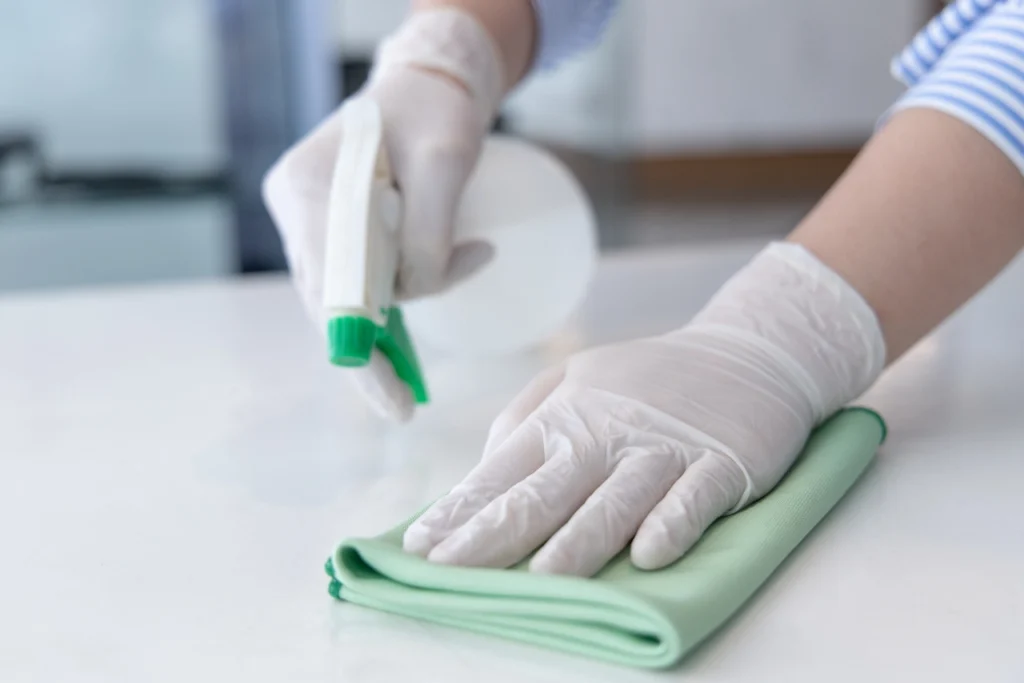
Kitchens and bathrooms hold the highest concentrations of bacteria in most homes. Chopping boards, taps, sink areas, and cloths can move bacteria between raw food, hands, and ready-to-eat food, a process known as cross-contamination. The Food Standards Agency advises regular cleaning of food-preparation surfaces and separate handling of raw meat to reduce the risk of food poisoning. Frequent disinfecting of these zones cuts the spread of the bacteria and viruses behind stomach upsets and seasonal colds.
How Does a Clean Home Support Mental Wellbeing?
A clean home supports mental wellbeing by reducing visual clutter, lowering stress, and giving a sense of order and control over the living space. Cluttered and untidy surroundings compete for attention and make it harder to relax. Research from Princeton University’s Neuroscience Institute has shown that visual clutter reduces the brain’s ability to focus and process information. A tidy room lowers that competing input, which helps the mind settle at the end of the day.
The act of maintaining a clean home also creates routine and a sense of achievement. For people who work from home or manage a busy household, an organised space reduces the low-level frustration of searching for items and living among mess.
Does a Clean Home Improve Sleep?
A clean home improves sleep by creating a calmer bedroom, cleaner bedding, and lower allergen levels that reduce night-time congestion. A survey by the US National Sleep Foundation found that people who make their bed and sleep on fresh sheets report better rest. Clean, dust-free bedding limits the mites and allergens that cause a blocked nose and itchy eyes overnight. A tidy bedroom with clear surfaces also removes the visual reminders of unfinished tasks that keep the mind active at bedtime.
How Does a Clean Home Improve Safety?
A clean home improves safety by removing trip hazards, reducing fire risk from clutter, and keeping kitchen and cooking areas hygienic. Safety benefits matter most for young children, older adults, and anyone with reduced mobility.
Fewer Trip Hazards
Loose items on floors and stairs, trailing cables, and crowded walkways are common causes of falls in the home. The Royal Society for the Prevention of Accidents reports that falls are the most frequent cause of home accidents in the UK. Clear floors and organised storage remove the obstacles that lead to slips and trips.
Lower Fire Risk from Clutter
Piles of paper, packaging, and general clutter add fuel to a fire and can block escape routes. Fire and rescue services across the UK advise keeping exits, hallways, and areas around heaters and cookers clear. Regular decluttering reduces both the fuel load and the chance of a blocked exit during an emergency.
Better Kitchen Hygiene
Grease build-up on hobs, extractors, and oven surfaces is flammable and can ignite during cooking. Frequent cleaning of cooking equipment lowers this risk and keeps food-preparation areas free of the bacteria that cause illness. A clean kitchen protects both against fire and against food-borne infection.
Does a Tidy Home Improve Productivity and Focus?
A tidy home improves productivity and focus by removing distractions, making tasks easier to start, and reducing the time lost to searching for misplaced items. A clear desk and organised workspace help people who work or study at home concentrate on one task at a time. Fewer objects in view means fewer interruptions, which supports steady focus through the day. An organised kitchen and storage system also shortens everyday chores, freeing time for work, rest, or family.
How Does Regular Cleaning Extend the Life of Furnishings?
Regular cleaning extends the life of furnishings by removing the dirt, grit, and grease that wear down materials and shorten the working life of appliances. Grit ground into carpet fibres cuts the pile and dulls the surface over time. Grease and limescale reduce the efficiency of ovens, kettles, and dishwashers. Dust inside appliances and behind fridges makes motors work harder and fail sooner. Consistent maintenance protects the money invested in flooring, upholstery, and white goods, and delays the cost of repair or replacement. It also helps maintain the value and presentation of a property for owners and landlords.
Which Areas Need the Most Attention?
The areas that need the most attention are the high-touch surfaces and moisture-prone rooms where germs and damp gather fastest. The priority points in a home are listed below.
- High-touch surfaces such as door handles, light switches, taps, remote controls, and handrails carry bacteria transferred by hands throughout the day.
- Kitchen surfaces including worktops, sinks, chopping boards, and taps hold food bacteria and need frequent disinfecting.
- Bathrooms collect moisture, limescale, and mould, so they need regular cleaning of tiles, grout, and extractor fans.
- Soft furnishings such as carpets, rugs, mattresses, and sofas trap dust mites and allergens deep in the fibres.
- Hidden spots behind and under appliances gather dust and can hide damp or pests.
Focusing effort on these points delivers the largest health benefit for the time spent cleaning.
When Should You Book a Professional Clean?
A professional clean makes sense when a home needs deep treatment beyond routine tidying, when time is short, or when a specific event calls for a thorough reset. Common situations include moving in or out, recovering after illness, preparing for guests, tackling built-up grime, or restoring carpets and upholstery. A regular domestic home cleaning service keeps a household on top of everyday hygiene, while a one-off deep clean resets a home that has fallen behind. For post-event, post-illness, or end-of-tenancy work, a dedicated specialist one-off clean uses stronger equipment and methods than routine cleaning. Care N Tidy provides these services for households and landlords across London and the wider UK, using eco-safe products that are suitable for homes with children and pets.
Key Takeaways
- A clean and healthy home manages both visible dirt and hidden factors such as air quality, damp, and bacteria.
- Reduced dust mites, mould, and surface bacteria lower the triggers for asthma, allergies, and infection.
- A tidy space lowers stress, supports focus, and helps people sleep more easily.
- Clear floors, decluttered rooms, and clean kitchens reduce trip hazards, fire risk, and food-borne illness.
- Regular cleaning protects carpets, furniture, and appliances, delaying the cost of repair or replacement.
- High-touch surfaces, kitchens, bathrooms, and soft furnishings need the most frequent attention.
Frequently Asked Questions
How often should a home be deep cleaned?
Most homes benefit from a deep clean every three to six months, alongside regular weekly cleaning. Households with pets, allergies, or young children often need deep cleans more frequently to control allergens and bacteria.
Can a clean home reduce asthma and allergy symptoms?
Yes. Regular cleaning lowers dust mites, pet dander, pollen, and mould, which are common triggers for asthma and allergic rhinitis. Cleaner air and fresh bedding reduce night-time congestion and daytime symptoms.
Which parts of the home hold the most germs?
Kitchens and bathrooms hold the most germs, along with high-touch points such as door handles, taps, light switches, and remote controls. These surfaces need frequent disinfecting to limit the spread of bacteria and viruses.
Does clutter really affect mental health?
Clutter competes for attention and can raise stress and reduce focus. Research links visual clutter to lower concentration, so a tidy, organised space helps the mind relax and supports better rest.
Is professional cleaning safe for children and pets?
Professional cleaning is safe for children and pets when eco-safe, low-toxicity products are used. Care N Tidy uses child-safe and pet-friendly products across its cleaning services.
Does regular cleaning save money?
Yes. Removing grit, grease, and limescale extends the life of carpets, furniture, and appliances, which delays the cost of repair or replacement and helps maintain property value.
Last Thoughts on a Clean and Healthy Home
A clean and healthy home protects the body, the mind, the household, and the property at the same time. Lower allergen and bacteria levels reduce illness. A tidy, calm space eases stress and improves sleep and focus. Clear floors and clean kitchens cut the risk of falls, fire, and food-borne infection. Regular care protects the money invested in furnishings and appliances. These benefits build up through consistent cleaning rather than occasional effort, which is why a steady routine, supported by a professional clean when needed, keeps a home both spotless and genuinely healthy for everyone living in it.