

Many people use the word “clean” as if it always means the same thing. In everyday life, that is understandable. A room looks tidy, the surfaces look clear, and everything seems in order. But in practice, not all cleaning works at the same depth, with the same purpose, or toward the same outcome.
This is where confusion begins.
Someone may expect a full reset when the actual goal is routine upkeep. Another person may assume a space only needs normal maintenance, when in reality it has accumulated enough hidden dirt, residue, or neglect to need something more thorough. When those expectations are mixed up, the result is often disappointment, frustration, or the feeling that a space still does not feel properly clean even after attention has been given to it.
The real difference in deep cleaning vs regular cleaning matters because each one solves a different problem.
One is mainly about maintaining a clean condition over time. The other is about restoring a space when that condition has slipped, or when build-up has reached a point that routine upkeep no longer addresses effectively.
By the end of this guide, you will understand:
-
what regular cleaning involves
-
what deep cleaning really means
-
when each one makes sense
-
why both matter in a realistic cleaning system
This is not about deciding that one is always better than the other. It is about understanding their roles clearly, so expectations match reality.
What Is Regular Cleaning?
Understanding Regular Cleaning in Practical Terms
Regular cleaning is best understood as maintenance.
It is the kind of cleaning that helps a space stay in a clean, manageable condition through consistency. Its purpose is not to transform an environment that has been neglected for a long time. Its purpose is to stop day-to-day dirt, dust, marks, and disorder from building up to that point in the first place.
In simple terms, regular cleaning supports continuity. It keeps a home, room, or workspace functioning in a clean way over time.
Maintenance, not reset
A useful way to understand regular cleaning is to compare it to routine upkeep in other areas of life. Many things stay in good condition not because they are completely restored every time, but because they are maintained before problems compound.
That same logic applies here.
Regular cleaning maintains cleanliness over time, unlike deep cleaning, which restores areas where build-up has already occurred. The difference is subtle but important. Regular cleaning protects the standard that already exists. It does not usually aim to recover a lost one.
What regular cleaning focuses on
Regular cleaning generally focuses on the visible and frequently used parts of a space. It deals with the ordinary signs of daily living or daily work.
That means its attention is often on:
-
ongoing dust and light debris
-
visible marks and everyday surface use
-
keeping key areas presentable and hygienic
-
preventing rapid deterioration in cleanliness
The emphasis is on keeping things under control before the environment begins to feel neglected, heavy, or difficult to reset.
Why consistency matters more than intensity
One of the most misunderstood ideas in cleaning is the assumption that harder or longer always means better. In regular cleaning, consistency matters more than intensity.
A space that receives calm, reliable maintenance usually stays in better overall condition than a space that is ignored for long periods and then tackled heavily in one go. That is because dirt, residue, and disorder become more difficult to deal with once they are allowed to settle in, dry out, layer up, or spread into overlooked areas.
Regular cleaning works best when it is:
-
predictable
-
repeated at sensible intervals
-
focused on upkeep rather than rescue
-
realistic for how the space is used
This is why regular cleaning often feels subtle. Its value is not always dramatic in the moment. Its real strength lies in what it prevents.
What Is Deep Cleaning?
Deep cleaning is not just regular cleaning done for longer. It is different in scope, depth, and intention.
Where regular cleaning supports maintenance, deep cleaning is about restoration. It addresses the areas, conditions, and types of build-up that routine upkeep does not fully resolve. It goes beyond surface improvement and aims to return a space to a more complete state of cleanliness.
This is why deep cleaning often feels more noticeable. It does not simply maintain a standard. It re-establishes one.
Deep cleaning is different in scope, not just time
People often assume deep cleaning means “the same tasks, but more time spent.” Time may increase, but time alone does not define it.
Deep cleaning differs because it reaches beyond the most obvious and immediate areas of attention. It deals with detail, hidden accumulation, neglected zones, and embedded dirt that regular upkeep may leave behind.
That is why the difference between deep cleaning vs regular cleaning lies in depth, scope, and intention.
The purpose of deep cleaning
Deep cleaning becomes relevant when a space needs more than routine support. This can happen for many reasons:
-
a long gap in maintenance
-
seasonal reset needs
-
heavier household or workplace use
-
visible decline in overall freshness
-
hidden build-up becoming more noticeable
-
changes in occupancy, routine, or environment
Its purpose is to tackle the condition beneath the visible surface.
In many cases, a space may appear reasonably tidy while still carrying a sense of heaviness, dullness, residue, or lingering uncleanliness. Deep cleaning addresses that gap between looking acceptable and being more thoroughly reset.
Why deep cleaning often feels transformational
Deep cleaning can feel transformational because it removes what routine cleaning has gradually worked around. Build-up changes the way a space looks, smells, and feels. When that build-up is reduced, the whole environment can seem lighter, clearer, and more settled.
That effect often comes from attention to:
-
overlooked detail
-
accumulated grime or residue
-
neglected edges and hidden areas
-
longer-standing hygiene concerns
-
layers of dirt that have become normalised over time
The result feels different because the purpose is different. Regular cleaning preserves. Deep cleaning restores.
Deep Cleaning vs Regular Cleaning. Core Differences at a Glance
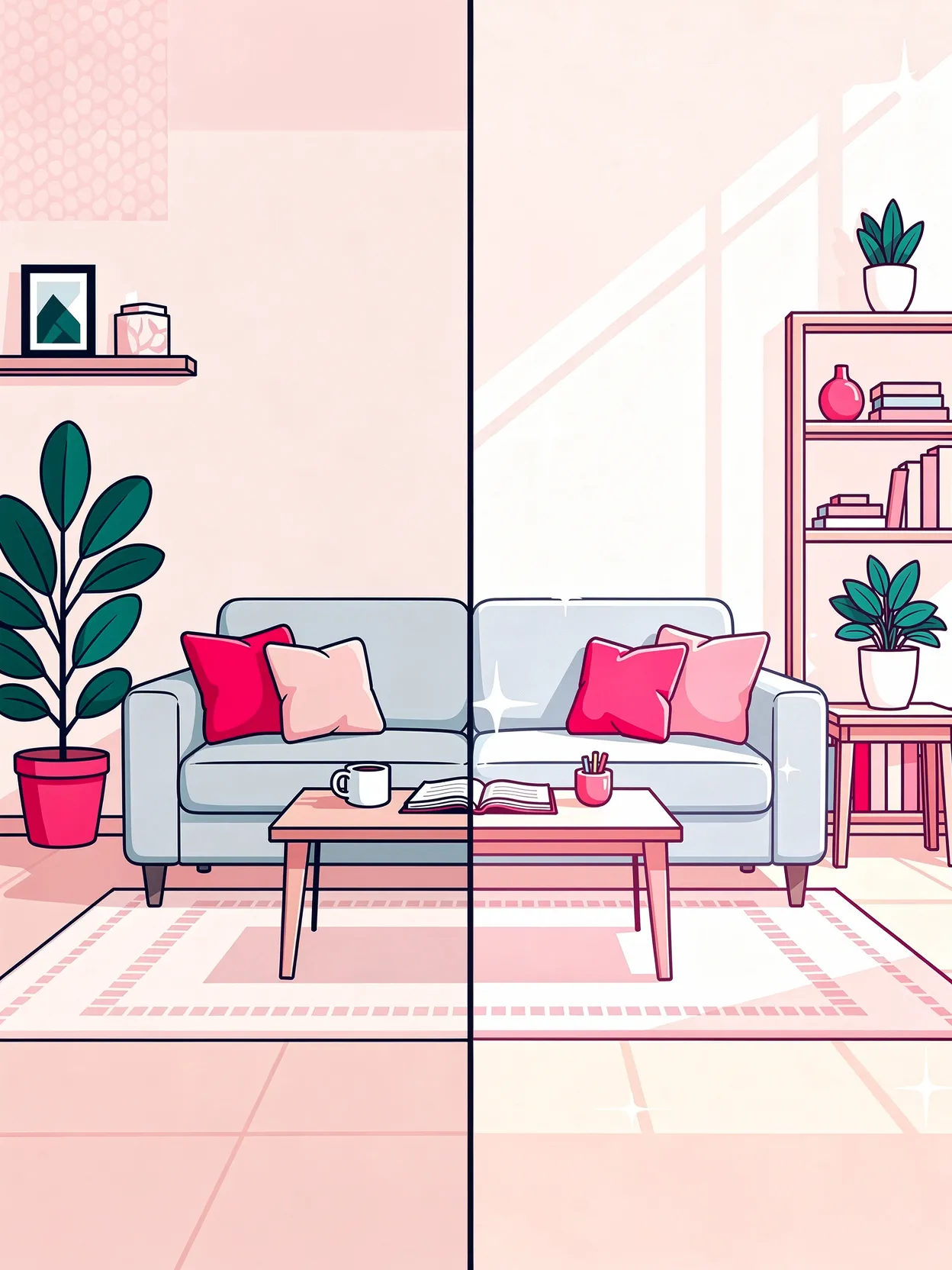
Understanding deep cleaning vs regular cleaning becomes easier when the differences are framed clearly. Neither exists to replace the other. They solve different cleaning needs.
Maintenance vs reset
This is the core distinction.
-
Regular cleaning is about maintenance
-
Deep cleaning is about reset
Regular cleaning helps a space remain manageable. Deep cleaning helps recover a space that has moved beyond basic maintenance needs.
Scope differences
Regular cleaning usually concentrates on visible upkeep and day-to-day cleanliness. Deep cleaning reaches further into the detail, hidden zones, and build-up areas that do not usually receive the same level of attention during routine cleaning.
Frequency differences
Regular cleaning tends to make sense at repeating intervals because its function is ongoing. Deep cleaning is usually less frequent because its function is corrective, restorative, or strategic.
Outcome differences
The result of regular cleaning is usually stability. The result of deep cleaning is usually change.
Regular cleaning helps a space stay acceptably clean. Deep cleaning often makes a space feel reset, refreshed, and more comprehensively restored.
Simple comparison table
| Aspect | Regular Cleaning | Deep Cleaning |
|---|---|---|
| Main purpose | Maintain cleanliness | Restore cleanliness |
| Focus | Everyday upkeep | Build-up and neglected areas |
| Depth | Surface and routine level | More detailed and thorough |
| Frequency | Ongoing and repeated | Occasional or situational |
| Typical outcome | Stable, manageable clean | Reset, refreshed clean |
| Best for | Well-kept spaces needing consistency | Spaces needing recovery or rebalancing |
This table is useful, but real-life decisions still depend on the condition of the space, not only the label.
When Regular Cleaning Is Enough?

Regular cleaning is enough when a space is already in a generally good condition and mainly needs consistency to stay that way.
This often applies in environments where dirt is managed before it accumulates too far. The goal is not to reverse neglect, but to stop neglect from developing.
Already well-maintained homes
Some homes do not need a major reset. They simply need a reliable pattern of upkeep.
In these settings, regular cleaning works well because:
-
build-up has not had time to settle deeply
-
surfaces remain manageable
-
routines support ongoing cleanliness
-
clutter and dirt are controlled before they spread
The role of regular cleaning here is protective. It preserves the cleanliness standard already present.
Busy households needing consistency
In busy households, the challenge is often not extreme dirt. It is pace. Life moves quickly, and small messes can accumulate faster than they are noticed.
Regular cleaning is well suited to this because it helps stabilise the environment. It supports a cleaner baseline without requiring every cleaning session to become a full reset.
Workspaces with routine upkeep
Routine cleaning also makes sense in work environments that already have good order, sensible hygiene habits, and a manageable flow of daily use.
In those situations, regular cleaning helps maintain:
-
consistency
-
presentability
-
day-to-day hygiene
-
a sense of control in shared spaces
Why regular cleaning prevents deterioration
The strongest argument for regular cleaning is not what it fixes. It is what it prevents.
When maintenance happens consistently:
-
dirt is less likely to settle into layers
-
residue is less likely to become stubborn
-
hygiene is easier to sustain
-
the space is less likely to reach a reset point too quickly
This prevention effect is one of the most important parts of the deep cleaning vs regular cleaning discussion.
Why regular cleaning does not reverse existing build-up
Regular cleaning is highly useful, but it has limits. If a space already has significant residue, neglected detail, heavy dust accumulation, or long-standing grime, routine maintenance may improve the appearance without fully resolving the underlying condition.
That does not mean regular cleaning is failing. It means the cleaning type no longer matches the condition of the space.
When Deep Cleaning Becomes Necessary? Signs That Regular Cleaning Is No Longer Enough
There comes a point where maintenance alone cannot restore the desired standard. This is where the difference between deep cleaning vs regular cleaning becomes most noticeable.
A space may still be receiving attention, yet continue to feel dull, heavy, or not fully clean. That often signals that hidden or long-standing build-up has moved beyond what routine upkeep is designed to handle.
Visible and invisible build-up
Some build-up is obvious. Other forms are less visible but still affect how a space feels.
Visible signs may include:
-
residue that keeps returning quickly
-
grime that no longer wipes away easily
-
areas that look tired even after cleaning
-
edges, corners, or fixtures that appear neglected
Less visible signs may include:
-
lingering stale smells
-
dust returning unusually fast
-
a persistent sense that the room never feels fully fresh
-
hygiene concerns in overlooked zones
Long gaps between cleaning
Time changes the condition of a space. Even if mess is not dramatic, long gaps in proper maintenance allow dust, residue, oils, and overlooked dirt to settle more deeply.
When this happens, regular cleaning may help manage the surface impression, but the environment often needs a more thorough reset to bring it back into balance.
Life or property changes
Deep cleaning often becomes necessary during transitions.
Examples include:
-
changes in household routine
-
seasonal reset periods
-
moving in or out of a property
-
renovation or repair disruption
-
increased occupancy or use
-
periods of illness, travel, or disruption that affect routine upkeep
These changes often create a mismatch between the current condition of the space and the level of cleaning it has been receiving.
When the environment stops feeling truly clean
One of the clearest signals is sensory rather than visual.
A space may look acceptable but still not feel properly clean. That feeling often comes from accumulated detail-level issues that routine cleaning does not fully address. Deep cleaning matters in these moments because it tackles what has been lingering beneath the surface impression.
Scope Differences Explained. Why Deep Cleaning Covers More Than You Expect?
A common mistake in the deep cleaning vs regular cleaning conversation is assuming the difference is only about “doing more.” The more accurate difference is that deep cleaning looks at the space differently.
It asks different questions:
-
where does dirt collect over time rather than day to day
-
what is seen less often but still affects hygiene and condition
-
what detail changes the overall feel of the environment
-
what has been maintained visually but not fully reset
Hidden areas vs visible areas
Regular cleaning tends to focus on the most used and most seen surfaces. That makes sense. Those are the areas that shape daily comfort and appearance.
Deep cleaning extends beyond that visible layer. It pays more attention to the spaces where dust, residue, grease, moisture effects, or neglected dirt gather out of normal sight or outside the rhythm of routine cleaning.
This hidden-visible difference is one of the strongest practical distinctions between the two.
Detail work vs surface work
Regular cleaning often supports the broader impression of cleanliness. Deep cleaning gives more attention to fine detail and layered build-up.
That detail can significantly change outcomes because small neglected zones often affect the whole atmosphere of a room. When enough of those zones are reset, the room feels meaningfully different.
Why time alone does not define deep cleaning
A quick routine clean done slowly does not automatically become deep cleaning. Deep cleaning requires a shift in purpose and structure, not only duration.
This matters because people sometimes expect reset-level outcomes from surface-level work simply because more time was spent. But depth comes from what is included, how it is approached, and how thoroughly accumulated issues are addressed.
The role of structure and checklists
Deep cleaning usually benefits from more deliberate structure. That does not mean complexity for its own sake. It means recognising that once cleaning moves beyond maintenance, consistency becomes harder without a clear framework.
Structure helps deep cleaning by:
-
keeping attention balanced across visible and hidden areas
-
reducing the risk of missing detail zones
-
helping the work remain methodical rather than random
-
aligning expectations with actual scope
This is one reason why deep cleaning often feels more complete. It is usually more intentional in how the space is assessed and approached.
Room-by-Room Comparison. How Deep Cleaning vs Regular Cleaning Differs by Area?

The difference between deep cleaning and regular cleaning becomes easier to understand when viewed room by room. The purpose is not to list tasks, but to explain how the approach changes depending on the space.
Kitchen
In kitchens, regular cleaning mainly supports day-to-day hygiene and order. It helps the space remain usable, fresh, and manageable as cooking and daily use continue.
Deep cleaning in kitchens goes further because kitchens naturally accumulate layered residue over time. Heat, moisture, oils, splashes, and repeated use create a kind of build-up that does not always disappear through normal upkeep alone.
So the difference in kitchens is often about:
-
ongoing hygiene versus accumulated residue reset
-
visible tidiness versus deeper freshness
-
routine maintenance versus more complete restoration
Bathroom
Bathrooms are heavily affected by moisture, soap residue, mineral deposits, and hygiene pressure. Regular cleaning helps sustain a hygienic and presentable baseline.
Deep cleaning becomes more relevant when moisture-related build-up, dullness, lingering residue, or neglected detail begins to shape the overall feel of the room.
In bathrooms, the distinction is often especially noticeable because build-up can become both visible and stubborn over time.
Living areas
Living areas often appear less demanding, but they quietly collect dust, fibres, touchpoint residue, and overlooked dirt in ways that change comfort more than people realise.
Regular cleaning supports comfort and day-to-day neatness. Deep cleaning is more about restoring the full feel of the space by addressing areas that routine cleaning may pass over or lightly maintain without fully resetting.
Bedrooms
Bedrooms benefit from regular cleaning because consistency supports comfort, calm, and sleep-related wellbeing. Dust and fabric-related particles can accumulate gradually even when the room looks tidy.
Deep cleaning in bedrooms usually matters when the goal shifts from basic upkeep to a more thorough reset of the environment, especially where hidden dust and less obvious accumulation begin to affect freshness.
Floors and touchpoints
Floors and touchpoints are useful examples because they show how routine and deep cleaning can work differently even in the same area.
Regular cleaning helps these areas stay controlled and hygienic on an ongoing basis. Deep cleaning addresses the kind of embedded dirt, neglected edges, repeated contact marks, or layered residue that gradually escapes day-to-day maintenance.
Why Deep Cleaning Impacts Hygiene Differently
One of the most important parts of the deep cleaning vs regular cleaning discussion is hygiene. People often assume that if a space looks clean, it is fully clean in every meaningful sense. Sometimes that is true. Often, it is only partly true.
Regular cleaning plays an important role in maintaining hygiene. It reduces the everyday dust, surface marks, and visible dirt that naturally return through normal life. But when build-up has had time to settle into harder-to-reach areas, neglected edges, moisture-prone zones, or repeatedly touched surfaces, maintenance alone may not fully reset the environment.
Why regular cleaning supports hygiene but does not eliminate all build-up?
Regular cleaning helps keep hygiene at a manageable level because it interrupts the normal cycle of daily dirt and dust. It stops surfaces from quickly becoming unpleasant or obviously neglected.
But regular cleaning is not always designed to fully remove:
-
accumulated residue from repeated use
-
deeper-set dust in overlooked areas
-
allergen build-up that develops slowly over time
-
grime that has bonded to surfaces through delay and repetition
This is not a weakness. It is simply a difference of purpose.
Bacteria, allergens, and hidden accumulation
Not all hygiene concerns are immediately visible. Some of the most important issues in a space are the ones that do not stand out at first glance.
Examples include:
-
dust accumulating in less obvious areas
-
allergens collecting over time in sleeping or living spaces
-
touchpoints carrying repeated daily contact
-
damp or moisture-prone zones allowing residue to develop quietly
This hidden layer is where deep cleaning often becomes more relevant. It looks beyond what is instantly noticeable and addresses the areas where gradual accumulation affects the environment more than people realise.
Indoor air and surface hygiene
A room can appear visually tidy while still feeling heavy, stale, or less fresh than expected. Often, this has to do with the relationship between surfaces, settled dust, and the overall condition of the indoor environment.
Regular cleaning helps maintain freshness. Deep cleaning often improves it more noticeably when the problem is not daily mess, but accumulated matter that has been left in place for too long.
Why hidden dirt matters
Hidden dirt matters because it changes the feel of a space. It affects comfort, freshness, and confidence in the overall condition of the environment.
This is why the difference between deep cleaning vs regular cleaning is not only visual. It is also environmental. One protects hygiene over time. The other restores it when underlying build-up has changed the condition of the space.
Time, Effort, and Planning Differences. Why Deep Cleaning Requires More Than Extra Time?

People often think the difference between regular cleaning and deep cleaning is simply that one takes longer. Time does matter, but it is not the full explanation.
Deep cleaning usually requires more planning, more structure, and more deliberate attention. Regular cleaning is often based on rhythm and efficiency. Deep cleaning is based on assessment and recovery.
Planning versus routine
Regular cleaning works best as part of a repeating rhythm. Because its purpose is maintenance, it can be approached with a familiar pattern that supports consistency.
Deep cleaning is different because it often begins with a condition-based judgement. It asks:
-
where has build-up accumulated
-
what areas are no longer responding to routine upkeep
-
what parts of the space need more than surface attention
-
what order of work will create a more complete reset
That planning element is one reason deep cleaning feels more involved.
Why deep cleaning cannot be rushed
Deep cleaning is not simply longer cleaning. It is more deliberate cleaning.
It usually cannot be rushed because:
-
build-up takes time to loosen or address properly
-
detail-level work requires concentration
-
overlooked areas require more inspection
-
meaningful reset needs structure, not random intensity
When people try to compress deep cleaning into a rushed routine format, the result is often a halfway outcome. The space improves, but it does not fully reset.
How regular cleaning prioritises efficiency
Regular cleaning has a different strength. It prioritises control and continuity. It helps maintain a baseline without turning every cleaning session into a major event.
Its efficiency comes from:
-
repeated familiarity with the space
-
attention to visible day-to-day needs
-
realistic maintenance focus
-
preventing dirt from becoming more difficult later
This is why regular cleaning often feels less dramatic. Its value lies in stability.
The long-term effect of skipping deep cleaning
Skipping deep cleaning for too long does not always create instant visible decline. Instead, it often produces gradual drag.
That drag may show up as:
-
a space that never feels fully fresh
-
persistent dullness despite regular upkeep
-
more effort needed just to maintain appearances
-
build-up becoming normalised over time
This is where deep cleaning vs regular cleaning becomes a practical planning issue, not only a definitional one. Regular maintenance without periodic reset can eventually lose effectiveness.
Expectations vs Reality. What Results You Should Expect From Each?

Many frustrations around cleaning come from mismatched expectations. People may expect regular cleaning to create reset-level results, or they may expect deep cleaning to permanently solve what actually requires ongoing maintenance.
Understanding deep cleaning vs regular cleaning clearly helps remove that confusion.
Why deep cleaning feels like a reset
Deep cleaning often feels dramatic because it addresses what has been accumulating beneath the day-to-day surface impression. It deals with what has been lingering, not only what has appeared recently.
That is why the result often feels like:
-
the room is lighter
-
the environment is fresher
-
surfaces seem more restored
-
the whole space feels more settled and complete
This reset effect is one of the clearest signatures of deep cleaning.
Why regular cleaning feels subtle but important
Regular cleaning usually feels less dramatic because it is not designed to transform. It is designed to sustain.
Its importance is often easiest to understand in reverse. When it is missing, deterioration becomes noticeable. When it is present consistently, the space tends to remain manageable, calmer, and easier to live or work in.
That subtlety does not make it less valuable. It makes it preventive.
“Clean enough” versus “reset clean”
This difference is useful for expectation-setting.
-
Regular cleaning often supports a “clean enough to function well” outcome
-
Deep cleaning often supports a “reset clean” outcome
Neither phrase is a judgement. They describe different purposes.
A well-maintained space may not need a reset. A neglected or transition-stage space may need much more than routine upkeep. The correct expectation depends on the condition of the environment and the role cleaning is meant to play in that moment.
Common Myths About Deep Cleaning vs Regular Cleaning

Myth 1. “Deep cleaning is only for dirty homes”
This is one of the most misleading assumptions.
Deep cleaning is not only for visibly dirty spaces. It is also useful for spaces that appear tidy but have accumulated hidden residue, neglected detail, or long-term build-up that routine cleaning has not fully addressed.
A home can look presentable and still benefit from a reset.
Myth 2. “Regular cleaning replaces deep cleaning”
Regular cleaning is essential, but it does not always replace deep cleaning. Its purpose is maintenance. If deeper layers of dirt, residue, or neglect have developed, regular cleaning may preserve appearances without fully correcting the underlying condition.
The two approaches are related, but not interchangeable.
Myth 3. “A quick deep clean is enough”
The phrase sounds convenient, but it often combines two conflicting ideas.
Deep cleaning usually requires enough time, structure, and depth to move beyond routine maintenance. If it is rushed too much, it may become regular cleaning with stronger expectations attached to it.
That is where confusion starts.
Myth 4. “If a home looks tidy, it does not need deep cleaning”
Visual neatness and deep cleanliness are not always the same thing. Tidy spaces can still carry:
-
hidden dust accumulation
-
moisture-related residue
-
overlooked detail build-up
-
dullness that routine cleaning does not fully remove
Myth 5. “Deep cleaning is always necessary”
Deep cleaning is not always necessary. Some environments are maintained so well through consistent routine care that a major reset is not needed often.
The correct decision is situational. That is one of the most important ideas in this whole topic.
How to Decide What You Actually Need? A Practical Decision Guide

Cleaning decisions are situational, not fixed. The best way to decide between deep cleaning and regular cleaning is to assess the condition of the space honestly rather than relying on labels alone.
Questions to ask yourself
A practical self-assessment can begin with questions like these:
-
Does the space generally stay in good condition between cleaning sessions?
-
Does it feel fresh after routine upkeep, or still slightly unresolved?
-
Are there signs of long-standing build-up or neglected detail?
-
Has there been a long gap in maintenance?
-
Has the household, workspace, or property recently gone through a transition?
-
Does the room look tidy but still not feel properly clean?
These questions help identify whether the issue is maintenance or reset.
Signs regular cleaning is working
Regular cleaning is usually enough when:
-
the environment already feels under control
-
surfaces respond well to routine upkeep
-
there is no strong sense of hidden neglect
-
the space remains fresh and manageable between cleaning sessions
-
cleaning mostly serves the purpose of consistency
Signs deep cleaning is needed
Deep cleaning is often more appropriate when:
-
routine cleaning improves the appearance but not the overall feel
-
residue, dullness, or build-up keeps returning
-
certain areas seem beyond ordinary upkeep
-
the space has had a long period without proper reset
-
a property or lifestyle change has altered the condition of the environment
In practical terms, the difference between deep cleaning vs regular cleaning comes down to whether the space needs support or recovery.
Frequency and Long-Term Strategy. How Deep Cleaning and Regular Cleaning Work Together?

One of the most helpful ways to think about cleaning is as a layered system rather than a single type of action. Regular cleaning and deep cleaning work best together.
Why both coexist
Regular cleaning protects a space from slipping too quickly. Deep cleaning restores a space when time, use, or life changes have pushed it beyond the reach of routine maintenance.
In that sense:
-
regular cleaning is stabilising
-
deep cleaning is corrective
A realistic cleaning system often needs both.
Why alternating levels works best
When maintenance and reset are combined thoughtfully, the environment tends to stay in better condition with less stress.
Regular cleaning supports:
-
continuity
-
manageable hygiene
-
day-to-day presentation
-
prevention of obvious decline
Deep cleaning supports:
-
recovery from slow build-up
-
restoration of neglected detail
-
improved freshness and depth
-
re-establishing a stronger baseline
Alternating levels of cleaning usually works better than expecting one type to do the job of both.
The non-financial cost of skipping deep cleaning
Even without discussing money, there is a cost to ignoring deep cleaning for too long.
That cost may include:
-
more stress from a space that feels harder to manage
-
disappointment when routine effort does not produce satisfying results
-
gradual decline in comfort and freshness
-
cleaning fatigue caused by constantly maintaining a weakened baseline
Stress reduction through planning
A simple long-term cleaning strategy reduces confusion. When people understand that maintenance and reset serve different purposes, they stop expecting one to fully replace the other.
That clarity alone often reduces frustration. Professional Standards and Reality Checks!
Why Labels Matter Less Than Standards
One of the most important reality checks in this discussion is that labels are not always used consistently. Different people can use the same words but mean different levels of depth, attention, and scope.
That is why standards matter more than terminology.
Why “deep cleaning” means different things to different people
The phrase “deep cleaning” can be interpreted broadly. For one person, it may mean more detail than usual. For another, it may mean a full reset of all neglected areas. The term sounds clear, but in practice it can vary.
This is exactly why misunderstandings happen.
Why structure matters more than wording
A clearer question is not “what is it called?” but “what standard is being aimed for?”
Structure matters because it helps define:
-
whether the goal is maintenance or reset
-
how much detail is included
-
whether hidden build-up is part of the focus
-
what level of transformation should realistically be expected
In other words, clarity comes from scope and intention, not only from labels.
How professionals assess surface versus embedded dirt
A more professional way of thinking about cleaning is to assess the condition of dirt rather than only the appearance of the room.
This means looking at:
-
what is sitting on the surface
-
what has built up over time
-
what responds easily to routine upkeep
-
what has become settled, layered, or neglected
That distinction helps explain why two spaces can look similar at first glance but need different cleaning approaches.
Why clarity prevents disappointment
Disappointment often comes from expecting maintenance to feel like restoration, or expecting restoration to replace maintenance forever.
Clear understanding of deep cleaning vs regular cleaning helps align expectations with actual outcomes. That is what reduces confusion and helps people make calmer, more practical decisions.
Conclusion. Deep Cleaning vs Regular Cleaning. Not Either-Or, But Both

The real difference between deep cleaning vs regular cleaning is not about which one is better. It is about what problem each one is designed to solve.
Regular cleaning maintains cleanliness over time. It protects the condition of a space through consistency, routine, and prevention. Deep cleaning restores cleanliness when build-up, neglect, or changing circumstances have pushed the environment beyond what maintenance alone can fully manage.
Both matter because both serve different purposes.
A clean space works best when cleaning is understood as a system:
-
maintenance to preserve
-
reset to restore
-
clarity to match expectations with reality
Once that difference becomes clear, a lot of stress falls away. Cleaning decisions become less emotional, less confusing, and more practical. Instead of wondering why a space still does not feel right, it becomes easier to recognise whether the situation calls for ongoing upkeep, a more thorough reset, or a combination of both over time.