Eco-friendly cleaning is now one of the most widely used phrases in the cleaning industry. It appears on websites, product labels, packaging, and service descriptions with increasing frequency. On the surface, that sounds positive. Greater interest in sustainability should be a good thing. The difficulty is that the phrase has become so overused that it often explains very little.
In many cases, eco-friendly cleaning is presented as a simple identity statement. A product is described as natural. A process is labelled green. A brand uses leaf imagery, soft colours, and reassuring language. Yet none of these things, on their own, prove that cleaning is genuinely sustainable in practice.
This matters because sustainability is not a mood, a visual style, or a marketing tone. It is a practical question. What is being used. How is it being used. What waste is being created. What exposure is being reduced. What harm is being limited. What outcomes are actually being achieved.
That is where much of the confusion begins. Consumers are often given claims without systems, language without evidence, and branding without operational clarity. The result is a market where eco-friendly cleaning can mean almost anything, which also means it can easily mean very little.
This article provides a more grounded explanation. It focuses on practice over slogans. It explains what eco-friendly cleaning actually looks like when sustainability is treated as a real working standard rather than a persuasive label. It also explores the difference between intention and impact, because environmental responsibility is meaningful only when it shows up in decisions, methods, and measurable outcomes.
Eco-Friendly Cleaning vs Greenwashing. What’s the Difference?
Why the distinction matters
Not every sustainability claim is false, but not every sustainability claim is meaningful either. That is the space where greenwashing appears.
Greenwashing happens when environmental language is used to create the impression of responsibility without enough evidence behind it. In cleaning, this often means the focus stays on appearance rather than practice. A business may look sustainable in its wording while still relying on wasteful methods, inconsistent systems, or vague product claims.
What greenwashing looks like in cleaning
Greenwashing in cleaning often appears through patterns such as:
-
Using “green”, “natural”, or “eco” without explaining what those words mean in practice
-
Highlighting one supposedly sustainable product while ignoring wasteful wider systems
-
Suggesting that pleasant fragrance or botanical imagery automatically signals low toxicity
-
Presenting sustainability as a fixed identity rather than a set of accountable actions
-
Relying on emotional reassurance rather than operational transparency
The problem is not simply exaggeration. The deeper problem is that greenwashing shifts attention away from what actually matters. It encourages people to judge cleaning by presentation rather than by outcomes, methods, and operational discipline.
Why branding is not the same as sustainability
Branding can communicate values, but it cannot replace evidence. A sustainable cleaning model should be demonstrable. It should be visible in product selection, chemical restraint, waste reduction, training, packaging decisions, compliance habits, and measurable reductions in unnecessary harm.
That means a cleaning approach is not eco-friendly because it says so. It becomes eco-friendly only when the system behind it supports environmental responsibility in a consistent, explainable way.
Outcomes matter more than claims
A useful test is this. If the sustainability message were removed, would the practice still show clear signs of environmental responsibility?
For example:
-
Are chemicals being used carefully rather than excessively
-
Are reusable systems replacing disposable habits where appropriate
-
Is waste actively being reduced
-
Is indoor exposure being limited
-
Are people and property being protected through thoughtful methods
If the answer is yes, the sustainability claim has substance. If not, the language may be more persuasive than real.
The central point is simple. Sustainability must be demonstrable, not decorative.
What Eco-Friendly Cleaning Actually Means in Practice?
Eco-friendly cleaning is best understood as a system designed to reduce unnecessary harm while maintaining high cleaning standards. It is not defined by one product, one label, or one isolated choice. It is defined by the relationship between materials, methods, people, property, and environmental impact.
That makes eco-friendly cleaning a practice-based model rather than a marketing category.
Eco-friendly cleaning as a system, not a product
Many people first associate sustainability with product choice. Products do matter, but eco-friendly cleaning does not begin and end there. A low-toxicity product can still be used wastefully. A refillable solution can still be overapplied. A biodegradable formula can still sit inside a careless process.
A more accurate view is that eco-friendly cleaning works through a connected system that includes:
-
Product selection
-
Dilution and dosing control
-
Cleaning methods and restraint
-
Waste and packaging reduction
-
Resource efficiency
-
Training and accountability
-
Protection of indoor environments
Without this broader system, sustainability claims remain incomplete.
The three pillars. Products, methods, outcomes
A useful framework for understanding eco-friendly cleaning is to think in three pillars.
1. Products
These are the substances and materials used within the cleaning process. Their composition, concentration, packaging, and potential harm all matter.
2. Methods
These are the techniques and workflows that determine how products and tools are used. Method includes dosage, dwell time, cloth systems, water use, and waste control.
3. Outcomes
These are the real effects of the system. Are harmful exposures reduced. Is unnecessary waste limited. Are cleaning standards maintained without excess chemical use. Are people and surfaces better protected over time.
This matters because sustainability is not simply about good intentions. It is about whether the full process produces lower-impact results.
Balancing people, property, and planet
Eco-friendly cleaning is often discussed only in environmental terms, but a responsible model balances three priorities:
-
People. Reduced exposure, safer indoor environments, better respiratory conditions, and thoughtful chemical use
-
Property. Appropriate methods that avoid residue, corrosion, abrasion, or long-term damage
-
Planet. Lower waste, lower toxicity, more efficient consumption, and more careful use of resources
True environmental responsibility does not sacrifice one area carelessly in the name of another. It works by improving the whole system.
Why “less harm” is not the same as responsible practice
One of the most important distinctions in sustainable cleaning is the difference between “less harmful” and “responsible.”
A method may be less harmful than a worse alternative, but that does not automatically make it responsible. Responsibility requires intention, control, and consistency. It means understanding trade-offs, reducing unnecessary excess, and making decisions that can be explained clearly.
Eco-friendly cleaning becomes credible when it moves beyond symbolic improvement and becomes a disciplined operational standard.
The Role of Cleaning Products. Important but Not Enough
Cleaning products play a significant role in eco-friendly cleaning because they affect toxicity, waste, exposure, and residue. Their ingredients, concentration, and usage patterns influence both immediate and long-term outcomes.
But products should be understood accurately. They are important, not sufficient.
What genuinely makes a product eco-friendly
There is no single feature that makes a product automatically eco-friendly. A more reliable judgment depends on several questions:
-
Is it designed to reduce unnecessary harmful exposure
-
Does it avoid excessive or needlessly harsh chemistry
-
Can it be used effectively at controlled dilution
-
Does it leave behind unnecessary residues
-
Is its packaging wasteful or reasonably managed
-
Is its use proportionate to the cleaning need
The real question is whether the product supports responsible practice rather than merely sounding environmentally friendly.
Biodegradability versus toxicity
Biodegradability is often treated as a simple proof of sustainability. It is relevant, but not enough on its own.
A product may break down over time and still present risks in use, especially if it is concentrated, irritating, or overapplied. In the same way, a product marketed as gentle may still be part of a wasteful or poorly controlled system.
Biodegradability and toxicity should be considered together. One does not cancel out the other.
Why “plant-based” claims can be misleading
“Plant-based” is one of the most common examples of language that sounds meaningful but can be misleading without context.
Plant-derived ingredients do not automatically mean:
-
Low toxicity
-
Better indoor air quality
-
Better sustainability performance
-
Safe use at any concentration
The source of an ingredient is only one part of the picture. The final formulation, concentration, application method, and overall system matter more than a single phrase on a label.
Fragrance, pH balance, and chemical concentration
Some of the most important product questions are practical rather than promotional.
Fragrance matters because strong scent does not prove cleanliness, and fragrance-heavy products may affect indoor comfort or sensitivity for some people.
pH balance matters because products that are too aggressive for the material can damage surfaces, causing unnecessary replacement and waste.
Chemical concentration matters because over-concentrated or poorly diluted products can increase exposure, residue, and environmental burden without improving results.
Responsible use matters as much as product choice
Even a well-chosen product becomes less sustainable when it is used carelessly. Over-spraying, poor dilution, repeated reapplication, and unnecessary mixing all increase impact.
That is why product responsibility includes:
-
Correct dosing
-
Controlled application
-
Appropriate dwell time
-
Surface compatibility
-
Avoiding unnecessary repetition
In eco-friendly cleaning, a responsible product used responsibly is far more meaningful than a fashionable product used wastefully.
Cleaning Methods Matter More Than Products
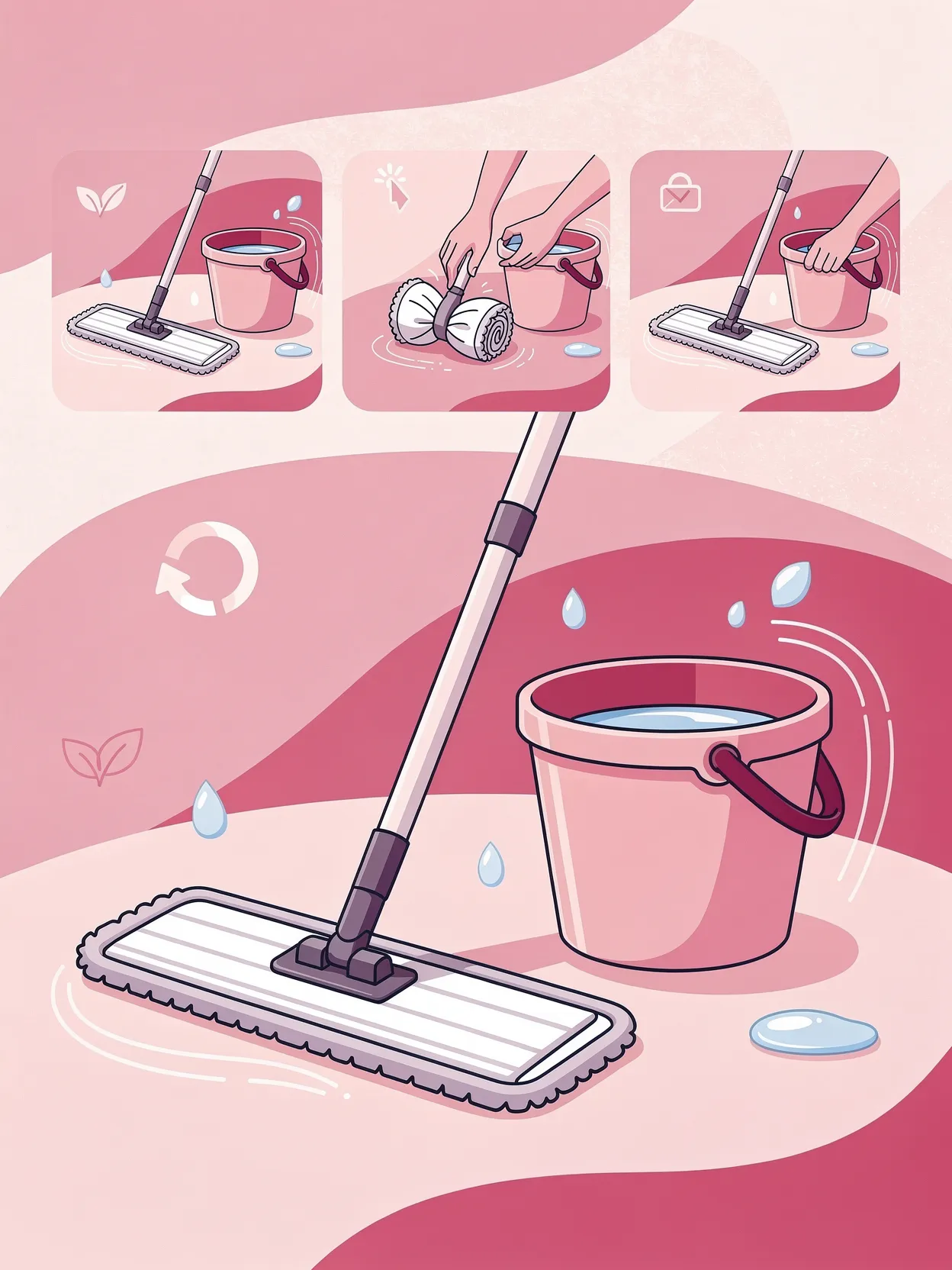
Public discussion about sustainable cleaning often stays focused on products because products are easy to label, package, and promote. Methods are less visible, yet they usually have a greater influence on real-world sustainability.
The process determines whether cleaning is restrained or excessive, efficient or wasteful, thoughtful or careless.
The environmental cost of overusing chemicals
One of the most common operational problems in cleaning is the assumption that more chemical means better results. In practice, excessive chemical use often creates several issues at once:
-
More residue on surfaces
-
Greater indoor exposure
-
More waste through unnecessary consumption
-
Additional rinsing or corrective cleaning
-
More packaging demand because products are replaced more often
A sustainable method is not weak. It is precise. Precision reduces unnecessary excess.
Water consumption as a sustainability issue
Water use is sometimes overlooked because it appears harmless compared with chemicals. In reality, water consumption is a sustainability issue, especially when methods rely on excessive rinsing, repeated passes, or avoidable waste.
Sustainable cleaning practices pay attention to:
-
Using only the volume required for the task
-
Reducing rework caused by poor technique
-
Choosing methods that do not rely on constant saturation
-
Managing extraction, rinsing, or wiping routines efficiently
Water efficiency is a form of environmental responsibility, not a secondary detail.
Microfibre systems and chemical reduction
Microfibre is important in discussions of eco-friendly cleaning because it can support better mechanical cleaning with lower chemical dependence when used correctly.
The key phrase is “when used correctly.” Microfibre is not a magic shortcut. Its value comes from system design:
-
Correct folding and rotation
-
Clean cloth discipline
-
Separation by area to reduce cross-contamination
-
Appropriate laundering and reuse
-
Pairing with suitable levels of moisture and product use
Used well, microfibre helps reduce unnecessary chemical intensity while maintaining cleaning standards.
Why training and restraint matter
Restraint is one of the least celebrated but most important sustainability skills in professional cleaning. It takes knowledge to know when not to add more product, when not to oversaturate a surface, and when a measured technique will outperform force.
Training supports this by teaching:
-
Product dosing and purpose
-
Surface sensitivity
-
Correct process order
-
Time-efficient workflows
-
When to escalate an issue rather than masking it
Informed restraint often produces better results than aggressive cleaning.
Efficiency over intensity
Sustainable cleaning is not about doing less carelessly. It is about doing the necessary work with greater control and lower waste.
Efficiency in this context means:
-
Fewer wasted motions
-
Less excess chemical use
-
More thoughtful sequencing
-
Better first-time outcomes
-
Reduced need for repeat cleaning
That is why cleaning methods matter more than products. Products are part of the system, but methods determine whether the system behaves responsibly.
Indoor Health. Why Eco-Friendly Cleaning Is About People Too

Eco-friendly cleaning is sometimes framed only as an environmental matter, but indoor health is one of its most practical and immediate dimensions. Cleaning affects the places where people live, work, breathe, and recover. That means sustainability should be judged partly by how well it supports healthy indoor environments.
This is especially important because many cleaning decisions are made indoors and their effects stay indoors. Residues, fragrance loads, aerosol use, and poor ventilation habits can all shape the atmosphere of a space long after the visible task has finished.
Indoor air quality and conventional cleaning habits
Conventional cleaning habits can affect indoor air quality in several ways:
-
Overuse of fragranced sprays
-
Aerosolised particles from aggressive application
-
Residues left on frequently used surfaces
-
Mixing or layering products unnecessarily
-
Cleaning routines that prioritise scent over sensible exposure control
None of these practices automatically mean a space is unsafe, but they can create unnecessary chemical presence in environments where people spend long periods of time.
Eco-friendly cleaning takes a more careful approach. It considers not only whether a surface looks clean, but also what has been introduced into the environment during the process.
Why this matters for families, pets, and allergy sufferers
Some groups are more affected by indoor cleaning conditions than others. Families with young children, pet owners, and people with sensitivities or allergies may notice the effects of cleaning choices more quickly.
That can include:
-
Irritation from lingering fragrance
-
Discomfort from poorly ventilated chemical use
-
Sensitivity to residues on frequently touched surfaces
-
Respiratory discomfort in enclosed settings
Low-toxicity environments are not about creating a sterile or chemical-free fantasy. They are about reducing unnecessary exposure where practical and sensible.
Respiratory health and chemical exposure
Respiratory wellbeing is one of the clearest reasons to take eco-friendly cleaning seriously. Strong-smelling spaces are often assumed to be cleaner, but smell is not a reliable measure of hygiene. In fact, heavy scent may indicate more chemical presence, not better cleaning.
A more responsible model asks:
-
Has the area been cleaned effectively
-
Has unnecessary chemical intensity been avoided
-
Has ventilation been considered
-
Has exposure been minimised where possible
That approach treats health as part of the cleaning outcome rather than as an afterthought.
Long-term exposure reduction as a meaningful outcome
One isolated cleaning decision may seem small. The larger issue is cumulative exposure. Repeated use of unnecessarily harsh or heavily fragranced methods can shape indoor conditions over time.
Eco-friendly cleaning supports long-term exposure reduction through:
-
More careful product choice
-
Lower-volume application
-
Better method control
-
Reduced residue
-
Improved awareness of indoor air quality impacts
This is one of the strongest arguments for treating sustainability as measurable. A cleaner-looking surface is not the only outcome that matters. Lower unnecessary exposure is an outcome too.
Waste, Packaging, and Resource Use. Sustainability extends beyond the surface
Many discussions about cleaning stop at what happens on the surface being cleaned. A more complete view looks at what the cleaning system consumes and discards along the way.
Eco-friendly cleaning includes resource awareness. That means thinking about:
-
Packaging waste
-
Disposable materials
-
Product overconsumption
-
Water use
-
Replacement cycles caused by poor cleaning practice
The environmental impact of cleaning is shaped not only by ingredients, but by the wider pattern of use.
Plastic and packaging waste in cleaning
Cleaning products often come in packaging systems that create repeated plastic consumption. When products are replaced frequently because they are overused or poorly controlled, packaging waste increases as well.
This is why sustainable cleaning practices often pay attention to:
-
Refill systems where appropriate
-
Concentrated products that reduce transport and packaging burden
-
Better dosing control to extend useful life
-
Avoiding unnecessary duplication of products for the same task
Packaging is not the only issue, but it is a visible and measurable part of environmental responsibility.
The problem with disposable systems
Disposable cleaning habits can appear convenient, but convenience often hides resource cost. Single-use wipes, unnecessary paper-heavy routines, and throwaway materials may create speed in the moment while increasing waste over time.
That does not mean every disposable item is automatically wrong. In some settings, disposability may support hygiene control. The more important question is whether disposables are being used by necessity or by habit.
A sustainable cleaning model asks whether reusable, washable, or refillable options can reduce unnecessary waste without lowering standards.
Refillable and reusable approaches
Refillable and reusable systems are often more sustainable because they reduce the constant cycle of use and disposal. Examples may include:
-
Refillable bottles with measured dilution systems
-
Reusable cloth systems with controlled laundering
-
Durable tools that support longer service life
-
Process design that reduces consumption overall
The point is not to romanticise reusability. Reuse is only beneficial when it is hygienically managed and operationally sensible. Sustainability works best when waste reduction is paired with disciplined process control.
Waste reduction as a measurable sustainability metric
Waste reduction is one of the clearest indicators that eco-friendly cleaning is functioning as a system rather than as an image.
Meaningful questions include:
-
Is less material being discarded unnecessarily
-
Are products lasting longer because use is controlled
-
Are fewer single-use items needed over time
-
Is packaging demand reducing through refill logic or smarter purchasing
These are practical signs that environmental responsibility is being translated into action.
Carbon Footprint and Operational Responsibility
Eco-friendly cleaning is often reduced to product choice, but sustainability also includes the wider operational system behind the work. Every cleaning routine has a footprint shaped by transport, equipment, energy use, product volume, laundering, waste handling, and the frequency of repeat work. If these factors are ignored, environmental responsibility remains incomplete.
The hidden carbon cost of cleaning activities
Cleaning may appear low-impact compared with other industries, yet its footprint builds through repetition. Small decisions, repeated daily across homes, workplaces, and managed properties, create a significant cumulative effect.
The hidden carbon cost of cleaning can include:
-
Repeated travel and inefficient route planning
-
Energy used to charge, power, or maintain equipment
-
Hot water use and laundering cycles
-
Product manufacturing, packaging, and transport
-
Re-cleaning caused by poor methods or inconsistent standards
A sustainable system pays attention to these hidden layers rather than focusing only on visible “green” signals.
Transport, equipment, and energy considerations
Transport is one of the clearest examples of operational impact. When travel is poorly organised, unnecessary mileage increases fuel use and emissions. In the same way, inefficient or poorly maintained equipment may consume more energy while delivering weaker results.
Operational responsibility means thinking about questions such as:
-
Are workflows efficient enough to reduce wasted visits or repeated tasks
-
Is equipment chosen for suitability and longevity rather than short-term convenience
-
Are cleaning routines creating avoidable energy demand through unnecessary repetition
-
Is laundering or water heating being managed thoughtfully rather than excessively
These are not glamorous details, but they are part of what sustainable cleaning looks like in practice.
Efficiency as a sustainability strategy
Efficiency is sometimes misunderstood as speed alone. In sustainable cleaning, efficiency means achieving the required standard with the least unnecessary waste of time, materials, energy, and effort.
That includes:
-
Doing the task properly the first time
-
Avoiding overuse of water or chemicals
-
Reducing the need for corrective cleaning
-
Using appropriate tools rather than forceful methods
-
Creating routines that are repeatable and controlled
Efficiency matters because every avoidable repeat, replacement, or re-clean adds impact. A disciplined system often lowers environmental cost without lowering standards.
The compounding impact of small decisions
Sustainability is rarely built through one dramatic change. It is usually shaped by dozens of small operational decisions.
For example:
-
A slightly better dosing system reduces chemical waste over months
-
A reusable cloth discipline reduces disposables over time
-
Better process order reduces rework
-
More thoughtful product selection lowers unnecessary exposure and residue
-
Better equipment care extends lifespan and reduces replacement demand
These improvements may seem modest in isolation, but their impact compounds. That is why eco-friendly cleaning is best understood as an ongoing operational discipline.
System-level responsibility
A responsible cleaning model does not hide behind isolated “green” features. It looks at the whole system and asks whether unnecessary harm is being reduced across the chain of activity.
System-level responsibility means sustainability is considered in:
-
Procurement
-
Product handling
-
Resource use
-
Staff behaviour and training
-
Waste management
-
Quality control
-
Continuous improvement
That broader view is what separates a sincere sustainability model from a narrow branding exercise.
Ethics, Training, and Accountability
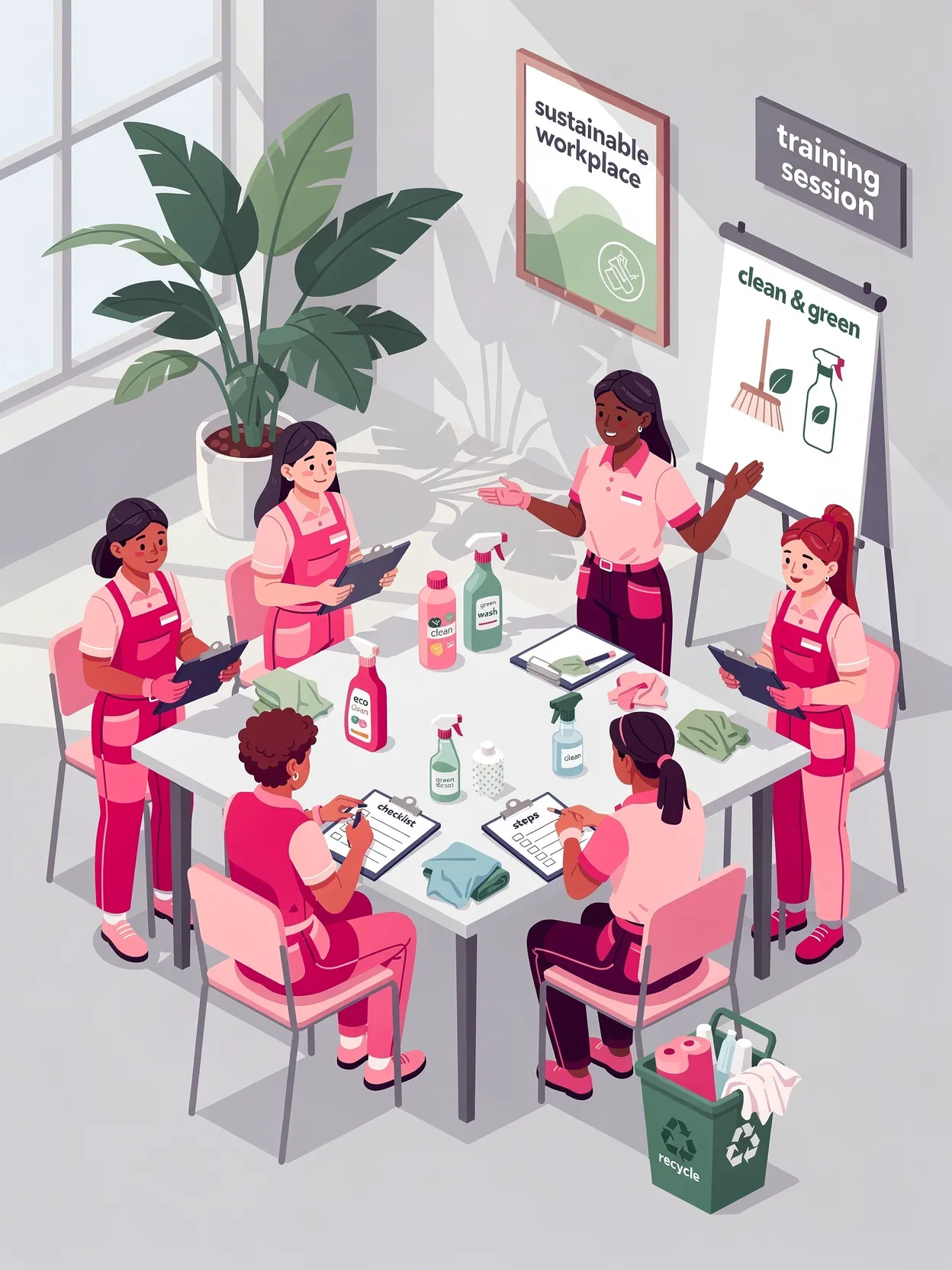
Eco-friendly cleaning is not only about the environment. It is also about people, judgment, and responsibility. A cleaning system cannot be called sustainable if it ignores the human side of how work is done, how decisions are made, and how risk is managed.
Sustainability includes people, not just the environment
Environmental responsibility is only one part of responsible cleaning. Ethical cleaning also considers:
-
The wellbeing of those carrying out the work
-
The safety of those occupying the cleaned space
-
The fairness and clarity of working methods
-
The duty to avoid avoidable harm to people and property
This matters because sustainability that overlooks human impact is incomplete. A system may reduce one kind of waste while still relying on unsafe habits, poor training, or inconsistent judgment.
Training as a sustainability driver
Training is one of the strongest foundations of eco-friendly cleaning. It helps transform good intentions into reliable practice.
Training supports sustainability by teaching:
-
When and how to use products properly
-
How to avoid overuse and unnecessary repetition
-
How to protect surfaces from damage
-
How to reduce cross-contamination
-
How to balance hygiene standards with lower-impact methods
-
How to make sensible choices when conditions vary
Without training, sustainability becomes fragile. People may rely on guesswork, habits, or excess. With training, restraint and precision become part of the system.
Informed decision-making by cleaners
Not every cleaning situation fits a script. Conditions vary. Materials vary. Levels of soiling vary. Occupancy and risk levels vary. That is why eco-friendly cleaning depends on informed decision-making, not just basic instruction.
A cleaner with judgment knows how to ask:
-
What is actually needed here
-
What is excessive
-
What method protects the surface best
-
What level of product use is appropriate
-
What risk does this area present
-
What outcome matters most in this context
This kind of judgment is essential for sustainable cleaning because environmental responsibility often depends on choosing proportionate action instead of defaulting to maximum intensity.
Fair practices and responsibility
Ethical cleaning practices also include the wider culture around the work. Sustainability is not credible when it is treated as a surface message while responsibility is absent behind the scenes.
A more ethical approach values:
-
Clear standards rather than vague expectations
-
Safe systems rather than rushed shortcuts
-
Transparency over exaggeration
-
Accountability for outcomes rather than image management
Eco-friendly cleaning becomes trustworthy when responsibility is visible in behaviour as well as language.
Accountability over image
Accountability means being able to explain decisions, methods, and outcomes. It also means being willing to improve when evidence shows the system can be better.
In cleaning, accountability may show up through:
-
Documented methods
-
Written guidance or internal standards
-
Safety compliance habits
-
Measurable reduction goals
-
Honest communication about trade-offs and limitations
Image can attract attention. Accountability builds trust.
Standards, Policies, and Proof
One of the biggest weaknesses in sustainability claims is the lack of structure behind them. When eco-friendly cleaning is real, it usually leaves traces of policy, process, and proof.
Why written environmental policies matter
A written policy does more than create a formal document. It clarifies what sustainability means in actual operational terms. It helps move a business or cleaning system from aspiration to practice.
A useful environmental policy may address:
-
Product selection principles
-
Chemical restraint and dosing
-
Waste reduction aims
-
Reuse and refill logic
-
Indoor health considerations
-
Staff responsibilities and expectations
-
Review and improvement procedures
The value of a policy is not that it exists. The value is that it creates consistency and a reference point for decisions.
The role of COSHH and compliance frameworks
Compliance frameworks matter because sustainability without safety is flawed. In the UK, COSHH helps ensure that substances hazardous to health are controlled responsibly.
In an eco-friendly cleaning context, COSHH supports:
-
Safer handling of cleaning chemicals
-
Better awareness of exposure risks
-
Clearer understanding of dilution and storage
-
Reduced chance of unsafe mixing
-
Stronger discipline around product use
Compliance does not make a system sustainable by itself, but it strengthens the structure needed for responsible practice. It also helps ensure that claims about low-toxicity environments are supported by actual risk awareness.
What certifications indicate, and what they do not
Certifications can be useful, but they are often misunderstood. A certification may indicate that a product, process, or standard meets certain criteria. That can be valuable. It can signal external review and a higher level of discipline.
But certifications have limits.
They do not automatically prove:
-
That the full cleaning system is sustainable
-
That product use is restrained in practice
-
That training and accountability are strong
-
That indoor health outcomes are consistently protected
-
That waste is being reduced across the operation
Certifications are indicators, not substitutes for operational integrity. They should be read as part of the picture, not as the entire story.
Audits and continuous improvement
A sustainability model becomes more credible when it includes review. Audits do not need to be dramatic or highly technical to be useful. The basic principle is simple. Look at what is happening, identify gaps, and improve.
Review may include:
-
Checking chemical use patterns
-
Monitoring waste volumes
-
Reviewing refill and reuse systems
-
Identifying where rework is happening
-
Improving workflows that create unnecessary resource use
Audits matter because sustainability is not a fixed claim. It is a practice that should become more disciplined over time.
Transparency as trust-building
Proof is not only about certificates and policies. It is also about transparent explanation. People trust sustainable cleaning claims more when those claims are specific, limited, and evidence-led.
Transparency may involve:
-
Explaining what eco-friendly cleaning means in practical terms
-
Being honest about what is improved and what remains imperfect
-
Avoiding exaggerated “chemical-free” or “zero impact” language
-
Showing how standards are maintained alongside environmental goals
Transparency does not weaken authority. It strengthens it.
Measuring Eco-Friendly Cleaning Outcomes
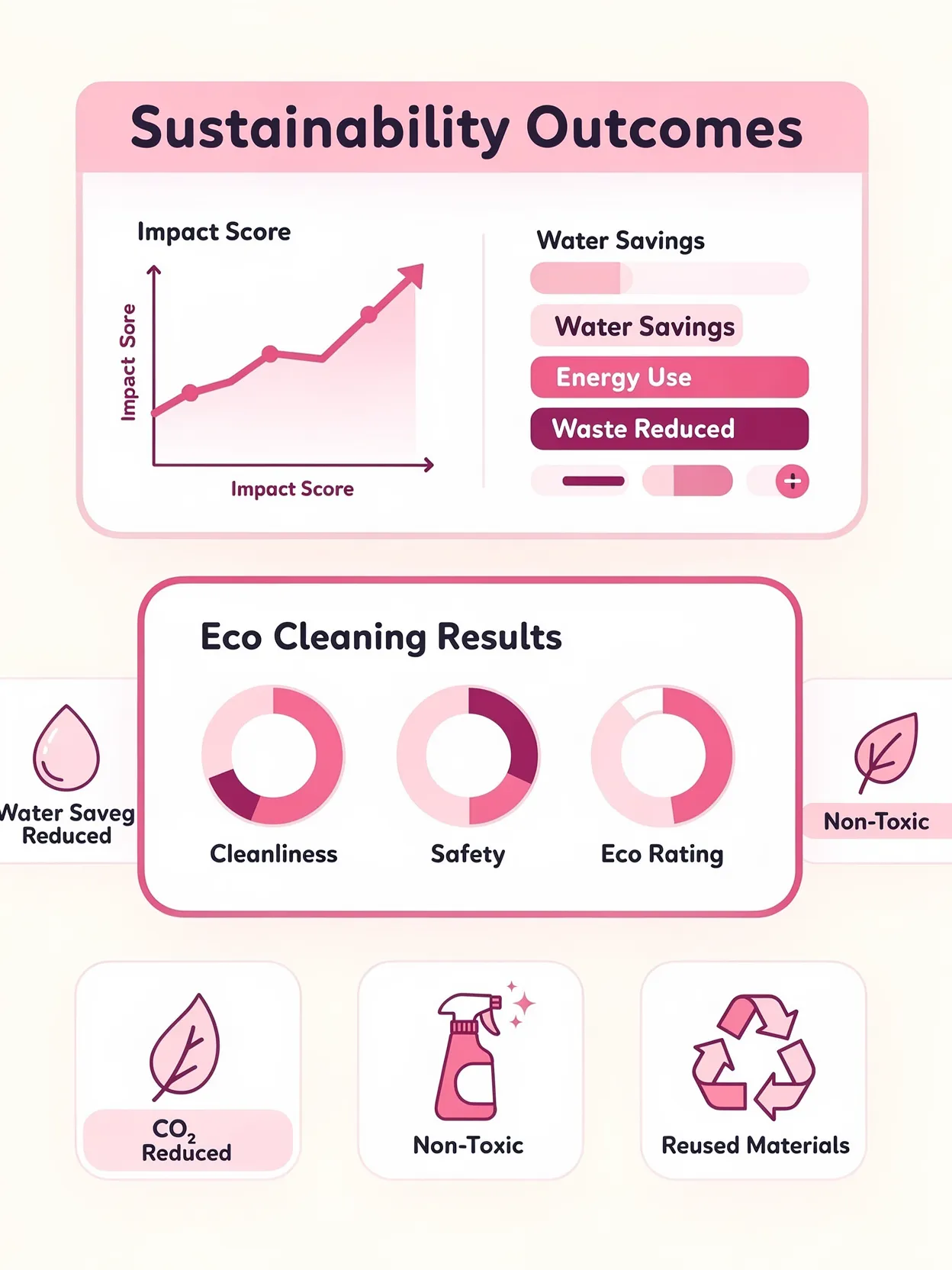
Intentions matter, but outcomes matter more. Sustainability cannot be judged only by what a cleaning system hopes to achieve. It must also be judged by what it actually changes.
Why intentions are not enough
Many cleaning approaches sound responsible in theory. The challenge is that theory does not always survive daily practice. Products may be chosen well but overused. Reusable systems may exist but be poorly managed. Environmental language may be strong while waste remains high.
That is why eco-friendly cleaning must be measured in some meaningful way. Measurement turns sustainability from a vague promise into a practical standard.
Examples of meaningful indicators
Not every cleaning environment will measure the same things, but useful indicators often include:
-
Reduction in unnecessary chemical volume
-
Lower use of disposable materials
-
Increased use of refillable systems
-
Reduced re-cleaning caused by poor first-time outcomes
-
Better control of indoor residues and fragrance load
-
Improved efficiency in resource use
These indicators are valuable because they connect sustainability language to visible operational behaviour.
Waste reduction and exposure reduction
Two of the clearest sustainability outcomes are waste reduction and exposure reduction.
Waste reduction may show up through:
-
Fewer single-use materials
-
Smarter packaging use
-
Longer product life through controlled dosing
-
Lower discard rates from overconsumption
Exposure reduction may show up through:
-
Lower fragrance intensity
-
Less unnecessary aerosol use
-
Improved ventilation awareness
-
Reduced residue on regularly used surfaces
-
More careful product selection for occupied indoor spaces
Both are meaningful because they affect real environments rather than abstract branding claims.
Efficiency gains as environmental proof
Efficiency can be measured indirectly through reduced resource waste. If the same or better standard is achieved with fewer repeat tasks, less product excess, and more thoughtful routines, that is a sustainability gain.
Efficiency becomes environmental proof when it leads to:
-
Lower consumption
-
Less corrective work
-
Better surface preservation
-
More stable indoor conditions
-
Less waste across the cleaning cycle
This is why sustainable cleaning should not be framed as compromise. Done properly, it can improve control and outcomes at the same time.
Intent versus impact
This may be the most important distinction in the whole discussion.
-
Intent is the desire to be environmentally responsible.
-
Impact is the real effect of the system in practice.
A credible eco-friendly cleaning model closes the gap between the two. It does not rely on good intentions alone. It tests whether actions are reducing unnecessary harm in measurable ways.
Common Myths About Eco-Friendly Cleaning
Myth 1. “Eco-friendly cleaning is less effective”
This myth survives because effectiveness is often confused with harshness. In reality, cleaning quality depends on the relationship between product, method, dwell time, mechanical action, and process order.
Eco-friendly cleaning can be highly effective when it is:
-
Properly matched to the task
-
Delivered through trained methods
-
Supported by restraint rather than excess
-
Measured by outcomes rather than smell or chemical strength
Effectiveness is a technical and procedural question, not simply a question of intensity.
Myth 2. “Stronger smell means better cleaning”
Scent has become one of the most misleading signals in cleaning culture. A strong smell may create the impression that something powerful has happened, but smell is not proof of hygiene or sustainability.
In many cases:
-
Smell reflects fragrance load, not cleaning quality
-
Heavy scent may increase indoor discomfort for some people
-
Cleaner-smelling does not always mean cleaner-performing
A responsible system values real cleanliness over sensory theatre.
Myth 3. “Eco-friendly cleaning is too slow”
Sustainable cleaning is sometimes assumed to be slower because it avoids excessive chemical force. In reality, a well-designed process can be both efficient and lower-impact.
Speed depends on:
-
Workflow design
-
Training
-
Correct tool use
-
Proper sequencing
-
Avoiding wasted motion and rework
Poorly designed conventional cleaning can be wasteful and slow. Well-designed eco-friendly cleaning can be highly efficient.
Myth 4. “It only matters to niche audiences”
Eco-friendly cleaning is no longer a niche concern. It matters to people who care about indoor health, waste reduction, ethical practice, and responsible property care. That includes homeowners, landlords, workplaces, and families who may never describe themselves as environmental enthusiasts.
Modern expectations increasingly include:
-
Lower unnecessary exposure
-
Better operational responsibility
-
Less wasteful cleaning systems
-
Higher trust in how cleaning is carried out
That is not niche. It is part of mainstream quality thinking.
Myth 5. “High standards and eco-friendly cleaning are incompatible”
This myth assumes sustainability requires lower standards or softer expectations. In practice, the opposite is often true. Eco-friendly cleaning usually demands more discipline, more method control, and more thoughtful decision-making.
High standards remain possible because sustainable cleaning focuses on:
-
Precision over excess
-
Appropriateness over aggression
-
Measurable outcomes over performative intensity
The strongest systems often show that environmental responsibility and professional standards can reinforce each other.
Eco-Friendly Cleaning as an Ongoing Commitment

Sustainability is not a switch that can be turned on permanently with one policy, one product line, or one piece of branding. It is an ongoing commitment shaped by continuous refinement.
Sustainability is not a fixed identity
One of the most useful mindset shifts is to stop treating “eco-friendly” as a permanent badge. A cleaning system can improve, regress, or become inconsistent over time. New materials appear. Better methods emerge. Old habits return if they are not monitored.
That is why sustainability should be treated as a direction of travel supported by evidence, not a flawless identity claim.
Continuous improvement over perfection
Perfection language can damage credibility because it encourages overclaiming. A stronger position is continuous improvement.
That means asking, over time:
-
Can waste be reduced further
-
Can exposure be lowered without compromising standards
-
Can training improve decision-making
-
Can packaging use be reduced
-
Can methods become more efficient
-
Can proof and transparency become clearer
This approach is more honest and more useful than pretending the work is already finished.
Honesty and transparency matter more than image
People are increasingly sceptical of polished environmental claims, and with good reason. Trust grows when sustainability is explained with realism.
That includes acknowledging:
-
That no cleaning system is impact-free
-
That trade-offs exist
-
That some choices are improvements, not perfect solutions
-
That measurable progress matters more than idealistic language
Transparency keeps eco-friendly cleaning grounded in practice rather than image.
The evolution of responsible practices
Responsible cleaning practices will continue to evolve. Products may improve. Refill systems may become more practical. Training standards may become stronger. Expectations around indoor health and waste reduction will likely continue rising.
That makes eco-friendly cleaning a long-term discipline. The goal is not to reach a static endpoint. The goal is to keep reducing unnecessary harm while maintaining high standards and clear accountability.
Conclusion. Sustainability Without Spin

Eco-friendly cleaning only becomes meaningful when it is practical, measurable, and honest. It is not defined by leaf symbols, soft wording, or fashionable product claims. It is defined by whether the cleaning system reduces unnecessary harm in real environments.
A credible approach to eco-friendly cleaning includes:
-
Responsible product selection
-
Restrained and efficient methods
-
Lower unnecessary exposure indoors
-
Better waste and packaging discipline
-
Operational awareness of carbon and resource use
-
Training, ethics, and accountability
-
Clear policies, proof, and continuous improvement
Sustainability without spin is not dramatic. It is disciplined. It values evidence over impression, outcomes over slogans, and responsibility over image.
Informed choices beat labels because labels can be vague. Actions matter more than slogans because actions shape the real impact of cleaning. That is what sustainable cleaning really looks like in practice.