A building project can be finished on paper and still not be ready in practice. Walls may be painted, fixtures installed, flooring laid, and tools removed, yet the space may still contain dust, residues, sharp debris, surface films, and hidden contamination that make it unsuitable for immediate use.
This gap between construction completion and real readiness is often underestimated. Many people assume that once the visible building work is done, the property is naturally ready for occupation, inspection, or handover. In reality, the end of building work often marks the beginning of another essential stage. The stage where the environment is made safe, clean, and fit for its intended use.
That is where post-construction and after builders cleaning becomes critical. It is not simply a finishing touch to make the space look more attractive. It is the process that converts a worked-on environment into a usable one. It addresses the fine dust that settles after cutting and sanding, the protective films and adhesive traces left on new surfaces, and the debris or residues that can affect safety, cleanliness, and first impressions.
A space is only complete when it is safe, clean, compliant, and ready for occupation. Post-construction and after builders cleaning is the final transformation that bridges the distance between construction activity and real-world use.
What Post-Construction and After Builders Cleaning Really Means?
Post-construction and after builders cleaning refers to the detailed cleaning stage that takes place after construction, renovation, fit-out, or building works have ended. Its purpose is to remove the dust, debris, residues, and contamination created by the work so the space can move from an active site condition to a safe, presentable, and usable environment.
This is why the phrase matters. Post-construction and after builders cleaning is not another way of saying general tidying. It refers to a specific cleaning context with its own risks, methods, and expectations.
What it includes
A true post-construction clean often includes:
-
Fine dust removal from surfaces, edges, fixtures, and hidden ledges
-
Debris removal and detail cleaning around corners and finish lines
-
Cleaning of newly installed fittings, glass, frames, switches, sockets, and handles
-
Removal of films, labels, adhesive traces, splashes, and residue marks
-
Cleaning of floors after building dust has settled into seams and edges
-
Attention to ventilation points, skirting areas, and high dust migration zones
The objective is not to create a merely “tidy-looking” space. It is to remove the environmental consequences of building work.
What it does not include
It is also important to clarify what post-construction and after builders cleaning does not mean.
It does not mean:
-
Routine domestic cleaning carried out in the usual weekly way
-
Simple site tidying during active works
-
Pushing visible waste aside so the area looks clearer
-
A quick wipe-down once trades leave
Site tidying and rubbish collection are useful, but they are not the same as a complete after builders clean. A room can look clear and still contain fine dust on every horizontal surface, residue on new materials, or airborne particles that continue to resettle.
Why the term “builders clean” is often misunderstood
The term “builders clean” is often used loosely. In some settings, people use it to mean any cleaning that happens after building work. In others, it refers only to a rough initial pass that removes major debris and obvious dirt.
That is where confusion begins.
A surface may appear visually cleaner after a basic clean, yet still fall short of what is needed for safe occupancy, handover, inspection, or immediate use. That is why terminology matters. Post-construction and after builders cleaning is not defined only by timing. It is defined by standard, depth, and readiness outcome.
Visual cleanliness versus environmental safety
One of the most important distinctions is the difference between visible cleanliness and environmental safety.
Visible cleanliness means the space looks presentable at a glance.
Environmental safety means harmful or disruptive residues have actually been removed.
A room may appear clean while still containing:
-
Fine dust on high and low surfaces
-
Residue on handles, fixtures, or flooring
-
Airborne particles that continue circulating
-
Sharp fragments or overlooked hazards in corners and thresholds
That is why a proper after builders clean must be judged by more than appearance.
Construction Dust. What It Is and Why It Matters? More than just “a bit of dust”
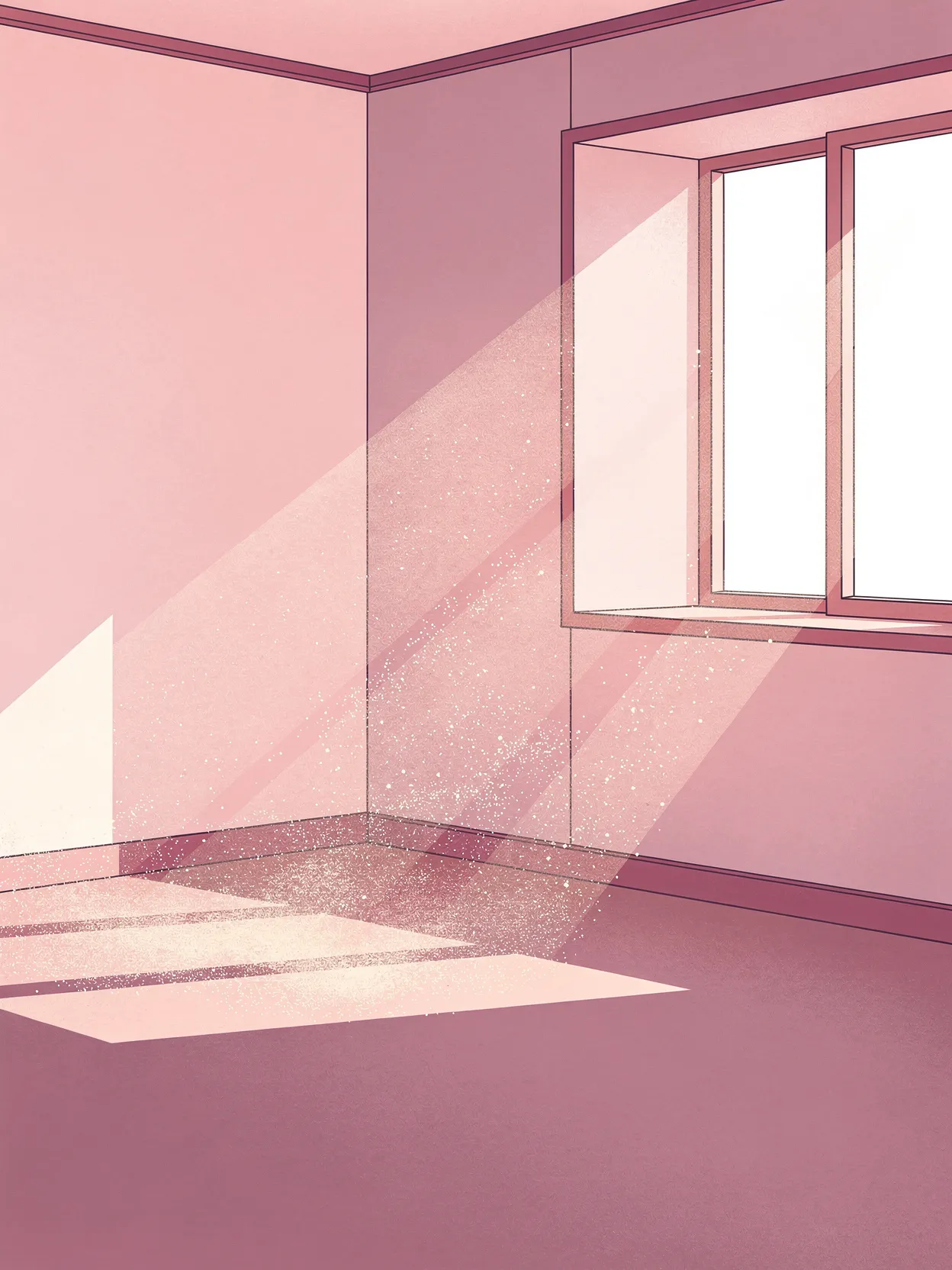
Construction dust is not the same as the everyday dust that gathers gradually in normal living or working spaces. It is often denser, finer, more mobile, and more persistent. It can be created through sanding, cutting, drilling, plastering, grinding, and the movement of materials through a site.
Depending on the work carried out, construction dust may include:
-
Plaster dust
-
Cement particles
-
Fine wood dust
-
Drywall residue
-
Silica-containing particles
-
General fine debris from cutting and finishing processes
This dust is often light enough to move beyond the immediate work zone and settle elsewhere.
Visible particles and airborne particles
The most misleading feature of construction dust is that the visible layer is only part of the problem.
Some particles settle where they can easily be seen, such as:
-
Window sills
-
Floors
-
Countertops
-
Shelving
-
Skirting boards
But a large amount can remain airborne or settle in less obvious areas, including:
-
Ventilation grilles
-
Light fittings
-
Door tops
-
Internal ledges
-
Fabric surfaces
-
Corners and crevices
This means a quick wipe of visible surfaces does not solve the underlying issue.
How dust travels beyond the work area
Dust rarely stays where the work happened. It moves through air circulation, foot traffic, opened doors, equipment movement, and natural settling patterns. Even contained projects often experience dust migration because particles are so fine.
This matters because people may assume unaffected rooms are clean simply because no building work occurred inside them. In reality, dust can travel widely and settle in areas that appear disconnected from the original construction zone.
Why dust keeps coming back
One of the most common frustrations after building work is the feeling that dust “keeps reappearing.” This usually happens because the original dust was not fully captured and removed. Instead, it was partially disturbed, spread, or superficially wiped.
Dust resettles when:
-
Airborne particles were never properly extracted
-
Surfaces were cleaned in the wrong order
-
Fine dust remained in vents, frames, edges, or soft furnishings
-
Wet wiping was used too early without effective dust capture
-
Floor dust was redistributed rather than removed
This is why dust control is not a cosmetic task. It is a health, safety, and process issue.
The real significance of dust control
Construction dust affects more than appearance. It can affect air quality, occupant comfort, final inspection quality, and the condition of new finishes. It is especially important in spaces that are about to be occupied, handed over, or reopened for use.
The key takeaway is clear. Dust control is a health and safety requirement, not a decorative extra.
Health, Safety, and Occupancy Risks After Building Work
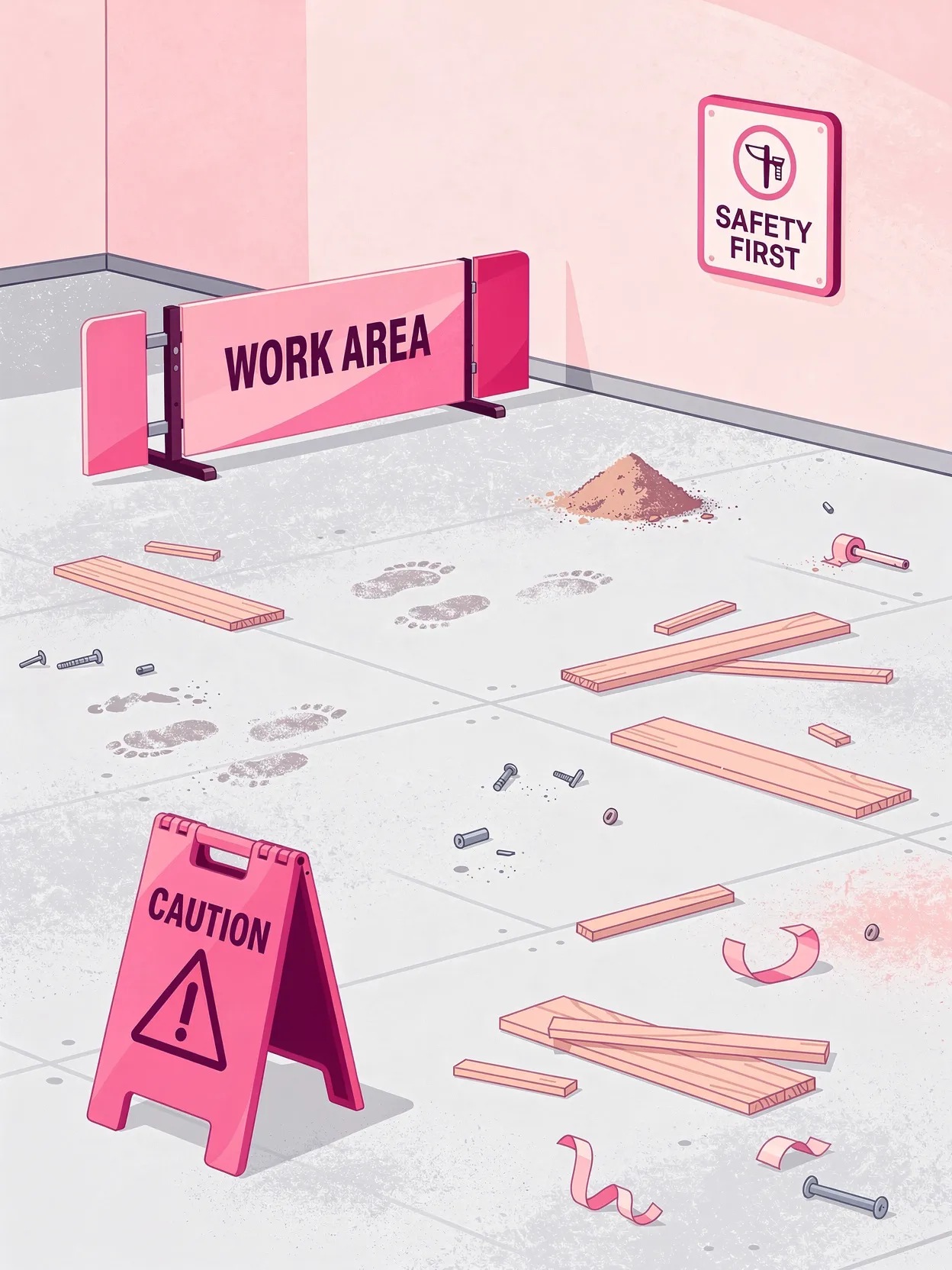
Even after tools are gone and visible work has stopped, a property may still contain hazards that matter to occupiers, staff, visitors, or inspectors.
Common risks after building work include:
-
Fine airborne dust affecting breathing comfort
-
Slips caused by powder residues on hard floors
-
Cuts from overlooked sharp fragments or material offcuts
-
Irritation from surface residues or cleaning chemicals used incorrectly
-
Obstructed ventilation points filled with dust
-
Residue on hand-contact surfaces such as handles and switches
These hazards are not always dramatic, but they are significant because they affect readiness.
Slip, cut, and respiratory risks
Three broad categories of risk often remain after construction activity.
Slip risks
Dust and powder residues on smooth flooring can reduce grip and create a slippery film, especially once mixed with moisture or foot traffic.
Cut risks
Tiny fragments of glass, tile, metal, screws, or sharp offcuts may remain in corners, under fixtures, near thresholds, or along edges.
Respiratory risks
Airborne dust and disturbed fine particles can affect comfort, cleanliness, and indoor air perception, particularly in enclosed or recently completed spaces.
These are practical reasons why post-construction and after builders cleaning should be treated as a risk-reduction stage.
Why incomplete cleaning delays occupancy
A space may be technically built, but if it still contains dust, debris, or residue, it may not be ready for:
-
Resident move-in
-
Staff use
-
Tenant handover
-
Public access
-
Final internal sign-off
Occupancy depends not only on finished construction, but on whether the environment is safe and acceptable to use.
Incomplete cleaning can lead to:
-
Delayed move-ins
-
Repeated complaints
-
Extra remedial visits
-
Damage to first impressions
-
Safety concerns that should have been addressed before handover
Cleaning as risk mitigation
This is why cleaning at this stage should be understood as risk mitigation.
It reduces:
-
Injury risk
-
Complaint risk
-
Delay risk
-
Reputational risk
-
Liability risk linked to avoidable environmental conditions
Viewed this way, post-construction cleaning is not separate from project completion. It is one of the final controls that supports a safe outcome.
From Construction Site to Habitable Space. The gap between build completion and handover

There is often a practical gap between “the work is done” and “the property is ready.” That gap is where many issues appear. A developer, landlord, contractor, or homeowner may stand in a finished-looking space and still sense that it is not quite ready. Usually, that instinct is correct.
The gap exists because construction activity leaves traces behind. The build may be complete, but the environment still carries the after-effects of the process.
Cleaning as the final project phase
A useful way to understand this stage is to treat cleaning as the final phase of the project rather than a separate afterthought.
Construction creates the structure, finishes, and functionality.
Post-construction and after builders cleaning creates readiness.
That readiness includes:
-
Safe surfaces
-
Clean air perception
-
Presentable finishes
-
Reduced residual hazard
-
Confidence during occupation or inspection
Without this final phase, the project may be complete physically, but incomplete experientially.
Practical completion versus real readiness
Practical completion may indicate that most contractual works are done, but practical completion does not automatically mean the environment is ready to be lived in, worked in, or handed over without issue.
Real readiness means the space can be entered and used with confidence. It means the visual finish aligns with environmental condition. It means the property no longer feels like a site.
That difference matters because occupiers, landlords, businesses, and inspectors do not judge readiness based on construction milestones alone. They judge the environment they can see, touch, and breathe in.
First impressions during handover and inspection
First impressions after building work are unusually important. A new or refurbished space is expected to feel fresh, controlled, and complete. Dust on ledges, residue on glass, debris in corners, or powder on floors immediately undermines that impression.
For developers, landlords, and businesses, this matters because handover moments carry weight. They influence trust, satisfaction, and perceived quality long before any long-term use begins.
A clean, settled, ready space communicates control.
An unfinished-feeling space communicates uncertainty.
Compliance, Inspections, and Sign-Off Readiness. Why cleanliness affects inspections?

Inspections do not only evaluate whether something was built. They also reflect whether the environment appears complete, controlled, and ready for its intended use. Cleanliness influences that perception more than many people realise.
Inspectors, managers, owners, and stakeholders often notice:
-
Dust on newly finished surfaces
-
Debris near skirtings, frames, and thresholds
-
Smears or adhesive traces on glass and fittings
-
Residue around sanitaryware, kitchens, and fixtures
-
General signs that the space is not yet settled
A property may pass technical standards in one area and still create hesitation if its presentation suggests incompleteness.
What gets noticed beyond obvious surfaces
The most telling signs are often not on the main floor area or the centre of a room. They appear in the margins.
These include:
-
Door frames and tops
-
Internal window edges
-
Socket surrounds
-
Pipe edges and trims
-
Light switches
-
Vent covers
-
Corners where debris collects
These details matter because they reveal whether the clean was superficial or systematic.
Why dust and residue delay approvals in practice
Even when formal approvals are not blocked by cleaning alone, unresolved dust and residue often delay soft sign-off, practical handover confidence, or internal acceptance by the people taking responsibility for the space.
That can lead to:
-
Additional snagging-style observations
-
Re-cleaning requirements
-
Delayed furniture installation or occupancy
-
Reduced confidence in the completion standard
In this sense, cleanliness supports more than appearance. It supports the confidence needed to say the environment is genuinely ready.
Cleaning and compliance documentation
A compliance-aware environment values evidence, process, and readiness. Cleaning supports that culture because it demonstrates that the final stage of occupation preparation has been taken seriously.
It contributes to a broader picture of:
-
Risk awareness
-
Site control
-
Responsible handover
-
Occupant preparedness
-
Professional project completion habits
That is an important E-E-A-T signal in itself. Understanding inspection readiness means understanding that presentation, hygiene, safety, and completion are linked.
Residential vs Commercial Post-Construction Requirements

Not all completed spaces are judged in the same way. A renovated home, a rental property, and a commercial premises each have different patterns of use, different stakeholder expectations, and different readiness pressures.
In residential settings, the concern often centres on:
-
Habitability
-
Dust removal from living areas
-
Protection of newly installed finishes
-
Immediate comfort and cleanliness perception
In commercial settings, the concern often expands to include:
-
Shared occupancy
-
Staff and visitor movement
-
Broader health and safety expectations
-
Presentation consistency across larger areas
-
Higher scrutiny in entrances, washrooms, and communal spaces
Shared and public spaces create stricter expectations
Commercial and shared-use environments usually require more systematic standards because more people interact with the space. A single overlooked issue can affect multiple users quickly.
This makes post-construction and after builders cleaning especially important in environments such as:
-
Offices
-
Retail premises
-
Managed buildings
-
Shared facilities
-
Customer-facing spaces
The cleaning depth often needs to reflect the usage intensity of the environment.
Usage-driven cleaning depth
A useful principle is this. The more people who will use a space, the more systematic the final clean usually needs to be.
That does not mean every commercial site is “dirtier” than a home. It means the consequences of incomplete cleaning often spread further and become visible faster. High-touch points, circulation routes, and presentation zones matter more because the space is experienced collectively.
Why commercial sites require systematic approaches
Commercial environments usually benefit from system-led cleaning because scale and consistency matter. Multiple rooms, zones, surfaces, and stakeholders require a more structured final standard.
That is why post-construction cleaning in commercial contexts is rarely just about what looks good on opening day. It is about whether the space functions confidently from first use onward.
Surfaces, Materials, and New Finishes
One of the most overlooked realities after building work is that newly completed surfaces are often at their most vulnerable. A finish may look complete, but it can still be affected by dust, adhesive traces, protective films, paint specks, plaster residue, and the wrong cleaning method.
Why residue affects materials differently
Not all surfaces respond to residue in the same way. Fine dust and leftover marks behave differently depending on the material.
For example:
-
Hard flooring may hold a powdery film that dulls appearance and reduces grip
-
Glass may show adhesive traces, smears, and dust lines very clearly
-
Painted surfaces can trap fine dust on texture points
-
New fixtures can lose their clean finish if residue dries onto them
-
Skirting boards, trims, and edges often catch settled dust that becomes obvious in daylight
This is why post-construction and after builders cleaning must be material-aware. The goal is not simply to remove dirt, but to do so in a way that protects the finish rather than damaging it.
Why the first clean matters so much
The first full clean after building work sets the tone for how a space will be experienced. It also influences whether new finishes stay looking new.
A poor first clean can:
-
Scratch surfaces through improper dust removal
-
Smear residues instead of lifting them
-
Leave adhesive traces to harden further
-
Push dust deeper into corners, seams, and vents
-
Create a false sense of readiness while problems remain
A correct first clean supports a clean baseline. It removes the remnants of the building process before normal use begins.
The risk of damage from incorrect methods
This stage requires care because new materials often look durable while still being easy to mark or dull with the wrong approach.
Damage can happen when:
-
Dust is wiped before being safely captured
-
Abrasive action is used on delicate finishes
-
Too much moisture is applied where residue should first be lifted dry
-
Chemical use is mismatched to the surface
-
Pressure is used to force a result instead of following a safe sequence
Professional credibility in this area comes from restraint as much as effort. Good after builders cleaning is not aggressive. It is controlled.
Long-term effects of residue left behind
Residue that remains after construction work does not always stay harmless. Over time it can:
-
Dull finishes
-
Attract more dirt
-
Interfere with the appearance of newly installed materials
-
Create friction at handover when “new” no longer looks new
-
Increase the need for corrective cleaning later
The early condition of a surface shapes how it performs and how it is perceived. That is why cleaning at this stage has a long-term value, not only a short-term visual one.
Timing, Sequencing, and Planning the Final Clean
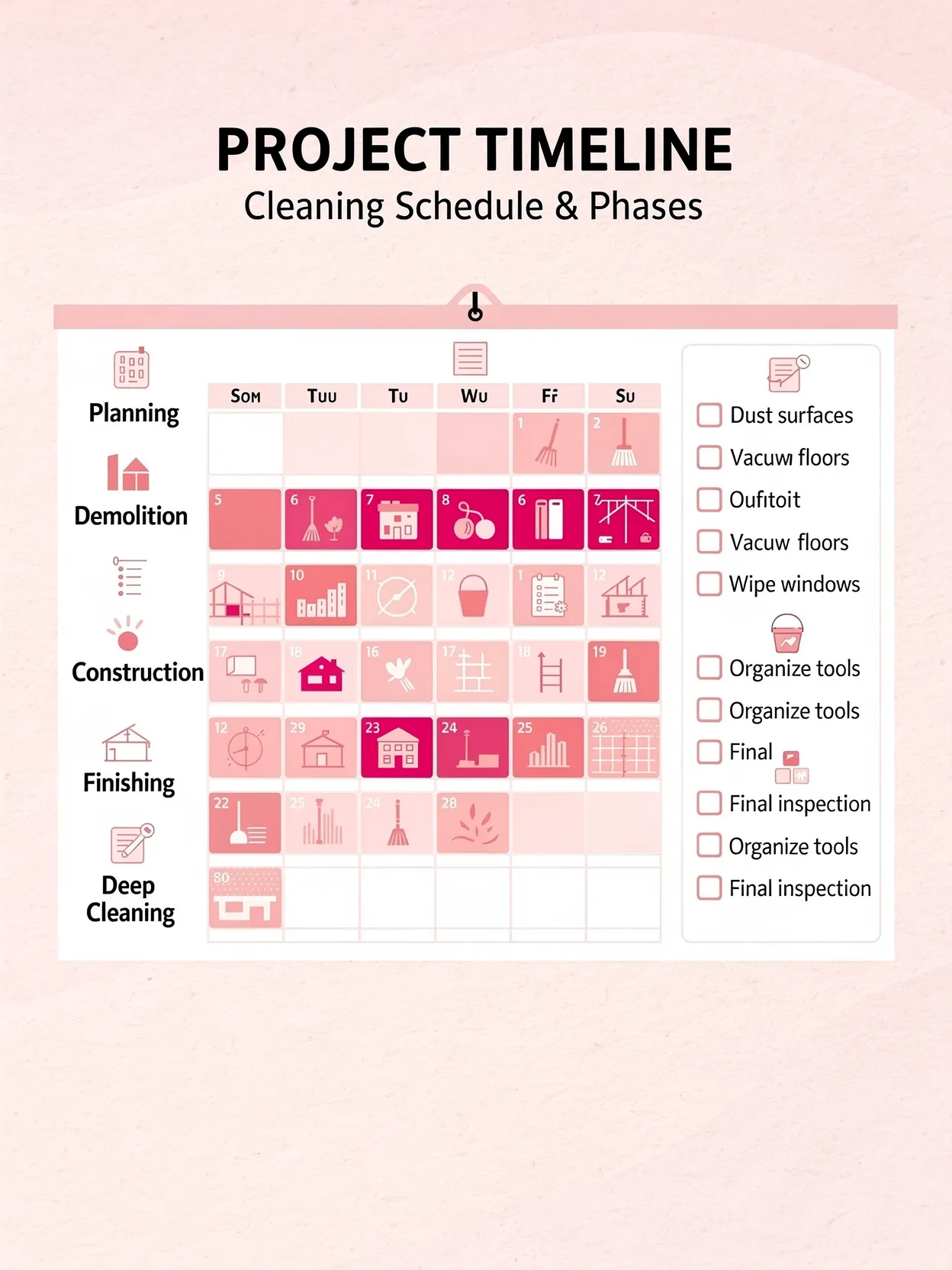
A final clean is not only about what is cleaned. It is also about when the cleaning happens and in what order.
Why timing matters
If cleaning happens too early, the result often fails to hold. Dust settles again, trades re-enter, materials move, and fresh marks appear. This creates rework, frustration, and delays.
If cleaning happens too late, other problems may appear:
-
Delayed occupancy
-
Delayed furniture placement
-
Reduced confidence at handover
-
Build-up becoming harder to remove
-
Pressure to rush what should be a controlled process
That is why post-construction and after builders cleaning works best when it is planned as part of the project close-out stage.
Why cleaning too early causes rework
Cleaning before dust-producing work has fully stopped is one of the most common causes of repeated effort.
Typical examples include:
-
Floors cleaned before final cutting or sanding is complete
-
Glass detailed before last-touch installation work finishes
-
Surfaces wiped before airborne dust has had time to settle
-
Rooms cleaned before protective coverings are removed
This does not mean no cleaning should happen before project completion. It means the right type of cleaning should happen at the right stage.
The importance of phased cleaning
In many projects, a phased approach makes more sense than a single all-at-once clean.
A phased approach might include:
-
Removal of major debris and obvious waste
-
Initial dust control and rough clean
-
Final detail clean once dust-generating activity has ended
-
Last inspection pass for touchpoints, edges, glass, and finishing details
This sequencing supports efficiency and helps avoid undoing completed work.
Ventilation and weather also play a role
Environmental conditions matter more than many people realise. Air movement, humidity, and open access points can affect how dust settles and how surfaces behave during final cleaning.
Ventilation can help a space settle, but it can also move particles into adjacent areas if not managed carefully. Weather can influence drying, floor conditions, and the movement of site debris.
That is why the final clean should be treated as a controlled stage, not a rushed conclusion.
The key planning insight
Rushing the final clean often increases cost and delays rather than reducing them. A properly timed clean reduces rework and improves the quality of readiness.
Tools, Techniques, and Dust Control Methods
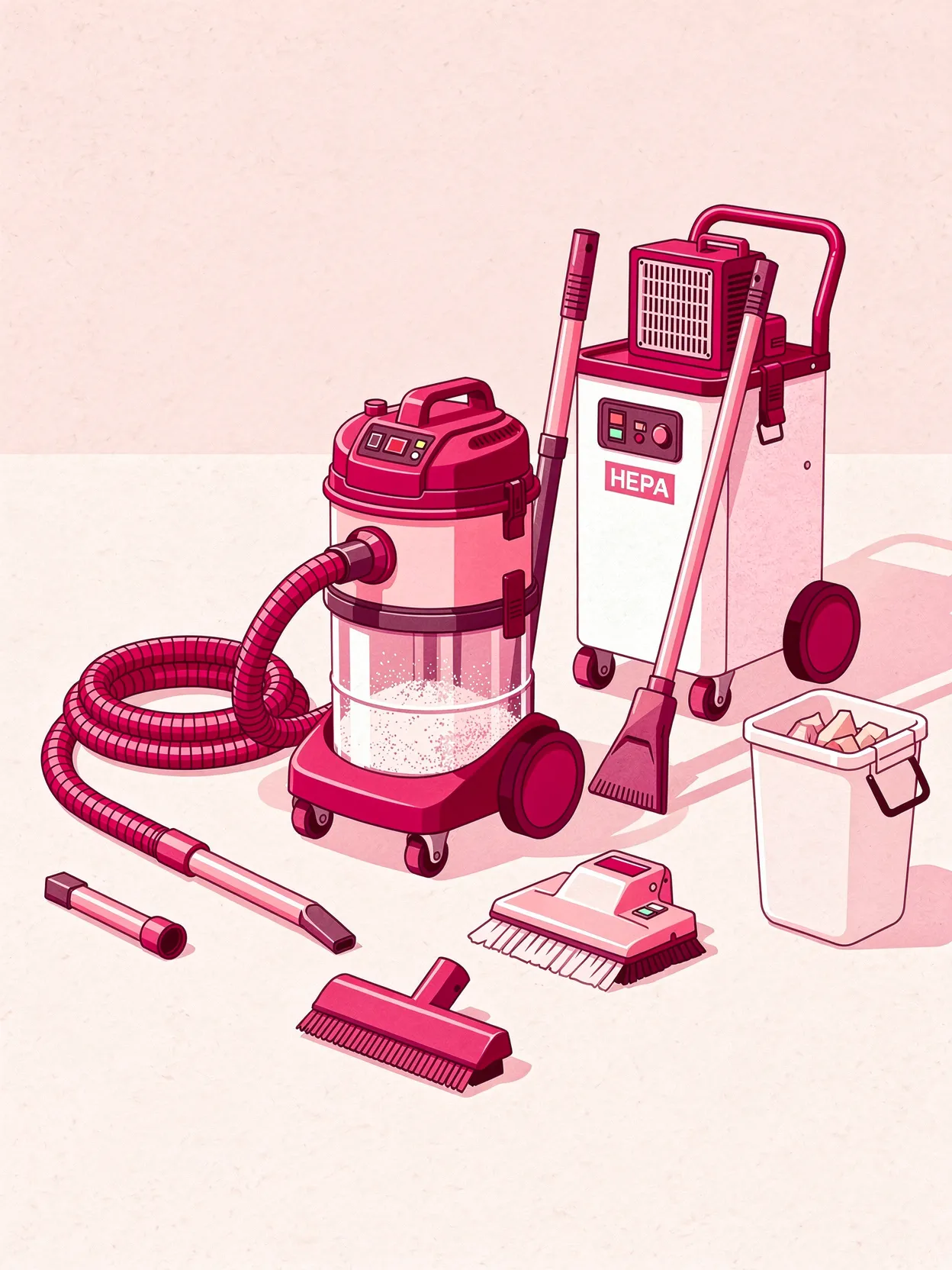
The methods used in post-construction and after builders cleaning are important because fine dust behaves differently from normal household dirt. It needs to be captured, not simply moved around.
Why HEPA filtration matters
Fine construction dust is small enough to become airborne again very easily. Standard dust removal methods may disturb particles without containing them.
This is where HEPA filtration matters. A proper fine-particle filtration process helps trap small dust particles rather than recirculating them back into the air. In a post-construction context, that supports:
-
Better air quality perception
-
Less dust resettling
-
More complete particle removal
-
A cleaner, more stable final result
The principle is simple. Fine dust should be captured, not redistributed.
The logic of vacuum-first cleaning
A vacuum-first approach is important because dry particulate matter needs to be removed safely before wiping or wet cleaning begins.
If wiping begins too early:
-
Dust turns into smear residue
-
Fine particles spread across surfaces
-
Edges and corners become harder to clean properly
-
Flooring may develop a muddy-looking film
Vacuum-first cleaning allows dry contamination to be lifted before detail work begins.
Why top-down methods work
Dust follows gravity. That makes top-down cleaning logical.
A top-down approach usually means:
-
Starting with higher ledges, fixtures, and surfaces
-
Moving down to mid-level fittings and detail points
-
Finishing with lower surfaces and flooring
This sequencing reduces the chance of cleaning an area only for fresh dust to fall back onto it from above.
Why wet cleaning alone often fails
Wet cleaning has its place, but on its own it is often ineffective after construction work. If used without proper dust capture, it can:
-
Push fine dust into surface textures
-
Leave streaking or residue
-
Create sludge-like build-up along edges
-
Give a temporarily cleaner appearance while leaving airborne dust unresolved
The issue is not moisture itself. The issue is sequence. Dry capture usually comes first. Controlled wet finishing comes later.
Capturing dust versus redistributing it
This is one of the most important distinctions in the entire process.
Redistributing dust makes a room look worked on.
Capturing dust makes a room cleaner.
That difference determines whether the space stays settled or continues shedding visible dust for days after handover.
First Use, Occupant Experience, and Long-Term Outcomes

A newly completed space is often judged most strongly in its first moments of use. This is when people decide whether the project feels finished.
Why spaces should only be used after the clean
When people enter a recently completed environment too early, several problems can occur:
-
Dust becomes disturbed again
-
Fresh footwear marks spread residues
-
New surfaces are touched before they are properly cleaned
-
Occupants form a negative first impression
-
Remaining hazards are normalised instead of resolved
The first use of a space should happen after the environment has been properly prepared.
Protecting new materials from the start
Post-construction and after builders cleaning helps preserve the investment made in finishes, fittings, and presentation. The first days of use matter because they often determine how “new” the environment continues to feel.
A properly cleaned handover helps:
-
Preserve the look of freshly installed materials
-
Prevent early dulling from construction residue
-
Reduce unnecessary remedial cleaning later
-
Support a stronger perception of quality from day one
Occupant perception and confidence
People respond quickly to environmental cues. A space that still feels dusty, marked, or unsettled immediately raises questions about whether the work is complete.
By contrast, a space that feels clean, clear, and stable creates:
-
Confidence in the completion standard
-
A stronger sense of safety and readiness
-
Better trust in the project outcome
-
Reduced likelihood of early complaints
This matters in homes, rental properties, and commercial spaces alike.
Long-term outcomes begin with the final stage
The final clean shapes the first experience, and the first experience shapes long-term satisfaction. That is why this stage has influence beyond appearance. It affects trust, usability, and the perceived quality of the whole project.
Common Mistakes That Undermine Post-Construction Cleaning
Educationally, it is useful to understand not only what should happen, but what often goes wrong.
Mistake 1. Treating it like regular cleaning
The most common mistake is assuming post-construction and after builders cleaning is simply a heavier version of normal cleaning. It is not.
Construction residue behaves differently. The methods must also be different.
Mistake 2. Cleaning only what is obvious
Visible floors and surfaces get attention first, but many important areas are frequently missed, such as:
-
Door tops
-
Frame edges
-
Socket surrounds
-
Internal ledges
-
Vent covers
-
Corners behind doors
-
Thresholds and skirting edges
These overlooked areas often reveal whether the clean was superficial.
Mistake 3. Starting with wet cloths and mops
Using wet methods too early often spreads dust rather than removing it. This creates smearing, residue lines, and a false sense of completion.
Mistake 4. Ignoring dust resettling patterns
Dust often returns because it was not removed from high points, ventilation areas, or hidden collection zones. Unless the whole dust pathway is addressed, the space will continue feeling unfinished.
Mistake 5. Cleaning before the project is ready
A rushed final clean while trades are still finishing almost always creates rework. It wastes time and often lowers the final standard.
Mistake 6. Underestimating the cost of incomplete cleaning
Incomplete cleaning creates hidden costs such as:
-
Re-cleaning time
-
Delayed occupancy
-
Complaint handling
-
Reduced confidence during handover
-
Unnecessary wear on new finishes from corrective efforts
The real cost is rarely limited to appearance alone.
Why Post-Construction Cleaning Is a Necessity, Not an Add-On?

At a superficial level, it may appear that after builders cleaning sits outside the core building project. In reality, it sits at the point where the project becomes usable.
Cleaning as part of completion
A project is not fully complete just because the build phase has ended. Completion should include readiness for occupation, inspection, and normal use.
That readiness depends on:
-
Safety
-
Cleanliness
-
Environmental control
-
Presentation
-
Confidence in the condition of the space
Without those elements, the project remains in a halfway state. Built, but not settled.
The cost of skipping or minimising it
When post-construction cleaning is reduced to a quick tidy or delayed unnecessarily, the result is often:
-
Residual hazard
-
Poor first impressions
-
Repeat dust issues
-
Reduced trust at handover
-
Avoidable friction between parties
-
A space that feels unfinished despite the investment made
The cost of skipping this stage is often paid in inconvenience, delay, and compromised perception.
Readiness means more than appearance
A genuinely ready space is:
-
Safe to enter
-
Clean to use
-
Acceptable to inspect
-
Comfortable to occupy
-
Consistent with the quality promised by the build itself
That is why post-construction and after builders cleaning should be understood as a professional requirement, not an optional upgrade.
Closing Section. From Site to Safe Space
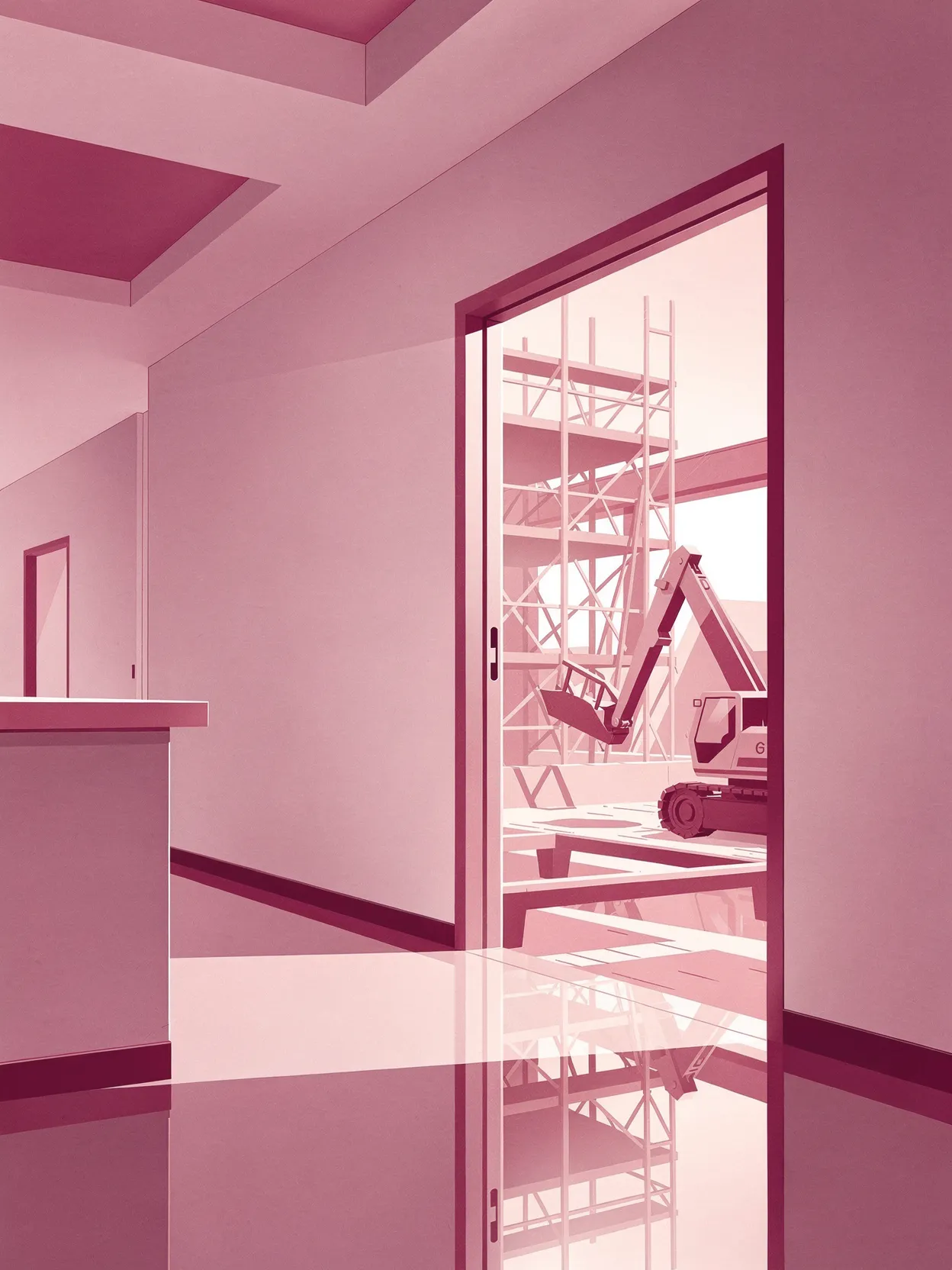
The journey from active building site to ready-to-use environment does not end when tools leave and work stops. It ends when the space is safe, clean, controlled, and ready for real occupation.
Post-construction and after builders cleaning is the stage that completes that journey. It removes the dust that lingers beyond sight, the residues that compromise finishes, and the hazards that stand between construction completion and confident use.
It supports:
-
Safety
-
Readiness
-
Compliance awareness
-
Better inspections and handovers
-
Stronger first impressions
-
Long-term protection of new materials and finishes
A finished build is an achievement. A ready space is the final assurance.
Because a space is only complete when it is safe, clean, and ready to be used.